
The short answer
- Pre-wedding locations in Bhopal are of three kinds: public lakeside spots, protected monuments and private venues. Each solves a different problem.
- At monuments protected by the Archaeological Survey of India, ordinary photography is allowed, but a camera stand or extra lights need written permission, and filming needs a licence applied for at least three months ahead.
- Van Vihar National Park is closed on Fridays, charges for professional photography and does not allow drones.
- Bhojpur is about 30 km from Bhopal, Raisen Fort about 44 km, Bhimbetka about 45 km and Sanchi about 46 km. Each is at least a half-day, so plan one heritage site per shoot.
- October to February gives the best light. The sunset in Bhopal moves by about ninety minutes across the year, from around a quarter to six in December to past seven in June.
- The plan that works is one public or heritage location in the morning and one private venue at dusk, where there is a room to change in and lighting after dark.
Every list of pre-wedding shoot locations in Bhopal names the same places: the Upper Lake, Gohar Mahal, Van Vihar, Sanchi, Bhimbetka. The lists are right about the places. What they leave out is everything that decides whether the shoot actually works: whether you are allowed to set up a tripod, how many other people will be in the frame, where the bride changes outfits, and what the light is doing at the hour you arrive.
The short answer is that Bhopal gives you three kinds of location. Public lakeside spots and parks are easy to walk into, and crowded at exactly the hour the light is best. Protected monuments are the most striking backdrops within reach of the city, and they come with rules on equipment that most couples discover at the gate. Private venues give you control, privacy and a room to change in, without the heritage backdrop.
This guide compares eleven places across all three kinds, sets out the permission rules as the authorities themselves state them, and ends with the plan most shoots settle into: one public or heritage location in the morning, and one private location at dusk.
Which pre-wedding shoot locations in Bhopal are worth considering?
Eleven places, six inside the city and four a drive out of it, plus the private option. The permission column is the one to read first.
| Location | Kind | The look | Permission | Best light |
|---|---|---|---|---|
| Upper Lake and Boat Club | Public lakeside | Open water, sunset, boats | Usually none for a small handheld shoot | Sunset, or sunrise for quiet |
| Gohar Mahal | Heritage building | Arches and courtyards of old Bhopal | Ask the site office before you plan | Morning |
| Rani Kamlapati Palace, Kamla Park | Protected monument | A stone palace between the two lakes | ASI rules apply | Morning or late afternoon |
| Van Vihar National Park | National park | A lakeside road under trees | Professional photography is charged. Closed on Fridays | Early morning |
| Sair Sapata | Tourism complex | A suspension bridge over the lake | Ticketed entry. Ask about shoots at the gate | Late afternoon |
| Kerwa Dam | Open natural spot | Water, rock and forest | Usually none for a small handheld shoot | Morning, after the monsoon |
| Bhojpur temple | Protected monument | A massive stone temple on a rise | ASI rules apply. It is a working temple | Early morning |
| Bhimbetka rock shelters | World Heritage Site | Sandstone formations in forest | ASI rules apply | Morning |
| Sanchi | World Heritage Site | Stupas and carved gateways on a hill | ASI rules apply | Early morning |
| Raisen Fort | Hill fort | Ruined palaces and long views | Check locally before you go | Late afternoon |
| A private venue or resort | Private property | Pool, lawn, lit gate, interiors | A booking with the venue | The hour before sunset, and after dark |
What do the location lists leave out?
Permission. It is the part nobody writes about, because it is dull and because it varies. Here is what the rules actually say.
Start with the protected monuments. Rani Kamlapati Palace, Bhojpur, Sanchi and Bhimbetka are protected by the Archaeological Survey of India, and the ASI's own guidance is clear on three points. Visitors may photograph a protected monument. A camera stand, extra lights or similar equipment may be used only with written permission from an archaeological officer. And filming is allowed only under a licence, which has to be applied for at least three months before the date.
Read that against what a pre-wedding shoot involves. A photographer with a handheld camera, and a couple walking through a monument, are doing what any visitor does. A tripod, a reflector on a stand, a light or a video crew are something else, and a team that turns up with them and no paperwork can be asked to stop. If your photographer plans to film at a monument, the three-month notice means that decision gets made in the summer for a winter wedding.
Van Vihar has its own rules. The national park on the Upper Lake is closed on Fridays, charges for professional photography, and does not allow drones. Confirm the current arrangement at the entrance before the day, not on it.
For everywhere else, ask the one person who knows: a photographer who has shot at that location in the last few months. Rules at public places change, and staff apply them differently on a busy Sunday than on a quiet Tuesday.
A handheld camera is a visitor. A tripod, a light or a video crew is a shoot, and at a protected monument a shoot needs written permission.
Which locations are inside Bhopal city?
Six places, all reachable without leaving the city. Three of them sit on the Upper Lake, which is why so many Bhopal pre-wedding albums look alike.
- Upper Lake and the Boat Club. The classic Bhopal frame: open water with the sun going down behind it. It is also where half the city goes in the evening, so the last hour of light is the busiest. A weekday works far better than a weekend, and sunrise works better than both.
- Gohar Mahal. Built in 1820 by Qudsia Begum, the first woman to rule Bhopal, on the bank of the Upper Lake. Its arched corridors and courtyards give a look nothing else in the city has. The building is also used for exhibitions and events, so ask the site office about access and photography before you plan a day around it.
- Rani Kamlapati Palace. An eighteenth-century palace inside Kamla Park, on the strip of land between the Upper and Lower Lakes, and a monument of national importance. The park around it is easy and public. The palace itself comes under the ASI rules above.
- Van Vihar. A long road along the edge of the lake, with trees on one side and water on the other. It opens early, which suits the light. It is a national park first and a backdrop second, so keep to the road and the rules, and remember it is shut on Fridays.
- Sair Sapata. A state tourism complex on the lake, best known for its suspension bridge. Entry is ticketed. The bridge is the frame everybody wants, which means waiting your turn on a busy evening.
- Kerwa Dam. Water, rock and forest on the edge of the city, at its best in the weeks after the monsoon when everything is green. It is open ground with no facilities, so go in daylight, go as a group and carry everything you need.
Which locations are a drive out of the city?
Four heritage sites lie between 30 and 46 km from Bhopal. Each is a half-day at least once the travel is counted, so plan one of them and not two.
- Bhojpur. About 30 km out, an unfinished eleventh-century Shiva temple built of enormous stone blocks. It is a working temple as well as a monument. Dress and behave as you would at any temple, and expect devotees in the frame on a Monday or a festival day.
- Bhimbetka. About 45 km south of Bhopal, a World Heritage Site of sandstone rock shelters inside a forest. The rock formations are the backdrop. The prehistoric paintings are fragile and are not a prop: nothing there gets touched or leaned on.
- Sanchi. About 46 km to the north-east, with the Great Stupa and its carved gateways on a hilltop. The light is best soon after opening, which is also when the site is quietest.
- Raisen Fort. About 44 km out, a hill fort with ruined palaces and long views across the plain. Reaching the top means a climb, which matters in a lehenga and matters more in the afternoon sun. Check access locally before you commit a day to it.
Bhojpur and Bhimbetka are both south of the city, on the Hoshangabad Road side. That matters if your second location of the day is on the same side of Bhopal.
When is a private venue the better choice?
A private venue cannot give you a thousand-year-old temple. What it gives you is everything the public places cannot, and for many couples that turns out to matter more on the day.
- Permission is a booking. You agree a date and a time with the venue, and the paperwork is done.
- Nobody else is in the frame. There is no crowd behind you at sunset, and no audience while you pose.
- There is a room to change in. Three outfits at a public location means changing in a car. At a venue it means a room with a mirror.
- The light can be made. A lit gate, pool lights and interiors mean the shoot carries on after sunset, when a public place is finished for the day.
- The weather has a fallback. If it rains or the wind gets up, you move indoors and carry on.
Public place, protected monument or private venue?
The honest trade is this. If the picture in your head has a monument or the lake in it, no venue will replace that. If it has the two of you, good light and three changes of outfit, a venue gives you more usable frames in three hours than a public place does in a day. Most couples want some of each, which is why the two-location plan exists.
| What matters | Public lakeside or park | Protected monument | Private venue |
|---|---|---|---|
| Permission | Usually none for a small handheld shoot | Written permission for stands and lights, and a licence for filming | A booking with the venue |
| Other people in the frame | Many, at the best hour | Visitors through the day | None |
| Changing outfits | In the car | In the car | A room on the property |
| Shooting after dark | Not practical | Most sites close by sunset | Yes, under the venue's own lighting |
| Backup in bad weather | None | None | Indoor spaces |
| What it is best at | The lake, the sky and the city | Scale, stone and history | Control, privacy and variety |
What time of day, and which months, give the best light?
Light decides more than location does. The same spot is flat and harsh at one in the afternoon and beautiful ninety minutes before sunset.
In Bhopal the sunset moves by about ninety minutes across the year, from around a quarter to six in December to past seven in June. That shifts everything. A shoot that starts at four in the afternoon is a full golden-hour session in winter and a hot, hard-lit one in May.
October to February is the season. The air is clear after the monsoon, the evenings are comfortable in heavy outfits, and the grounds and forests are still green into November. March is workable. From April to June, shoot at sunrise or not at all. The monsoon months give the greenest backdrops of the year and the least reliable days, so keep a covered or indoor option in the plan.
Wedding dates this season resume on 21 November, after Devuthani Ekadashi, and photographers' diaries fill up in the weeks before. A shoot in October or early November gets you the best light of the year, and the photographs in hand before the invitations go out.
Book the shoot four to eight weeks before the wedding. Much earlier and your look may change. Much later and there is no time left to use the pictures.
How should you plan the day?
One day, two locations, and a gap in the middle. This order works because it puts each location in the light and the crowd conditions it handles best.
- 01
Choose one heritage or lake location, not three
Travel eats light. One site shot well gives more usable photographs than three shot in a hurry.
- 02
Sort the permission first
If a monument is involved, ask the photographer what equipment they plan to carry, and get written permission for anything on a stand. Do this weeks ahead.
- 03
Shoot the public location in the morning
The quietest hour and the softest light come together, before the heat and before the crowds.
- 04
Break through the middle of the day
Harsh light and tired faces help nobody. Eat, rest and travel.
- 05
Finish at a private location at dusk
Change in a room, shoot the hour before sunset, then carry on under lights.
- 06
Plan the outfits around the locations
The simplest outfit goes to the monument. The heaviest one goes where there is a room to change in.
- 07
Carry what public places do not have
Water, a mirror, safety pins, flat shoes for the walking, and a sheet to sit on or change behind.
What goes wrong most often?
Almost every pre-wedding shoot that disappoints fails in one of these seven ways, and all seven are avoidable the week before.
- Arriving at a monument with lights and a tripod, and no letter.
- Planning Van Vihar for a Friday, when it is closed.
- Choosing the lake at sunset on a Sunday, with the rest of the city.
- Three locations in one day. Two is the limit, and one done well is better.
- A long climb or a long walk in the main outfit.
- No plan for where to change between looks.
- Flying a drone without checking. Drones are not allowed in Van Vihar, and the rules around monuments and parts of the city are strict. Assume a drone is not allowed until someone with authority tells you it is.
A pre-wedding shoot at The Heritage Resort
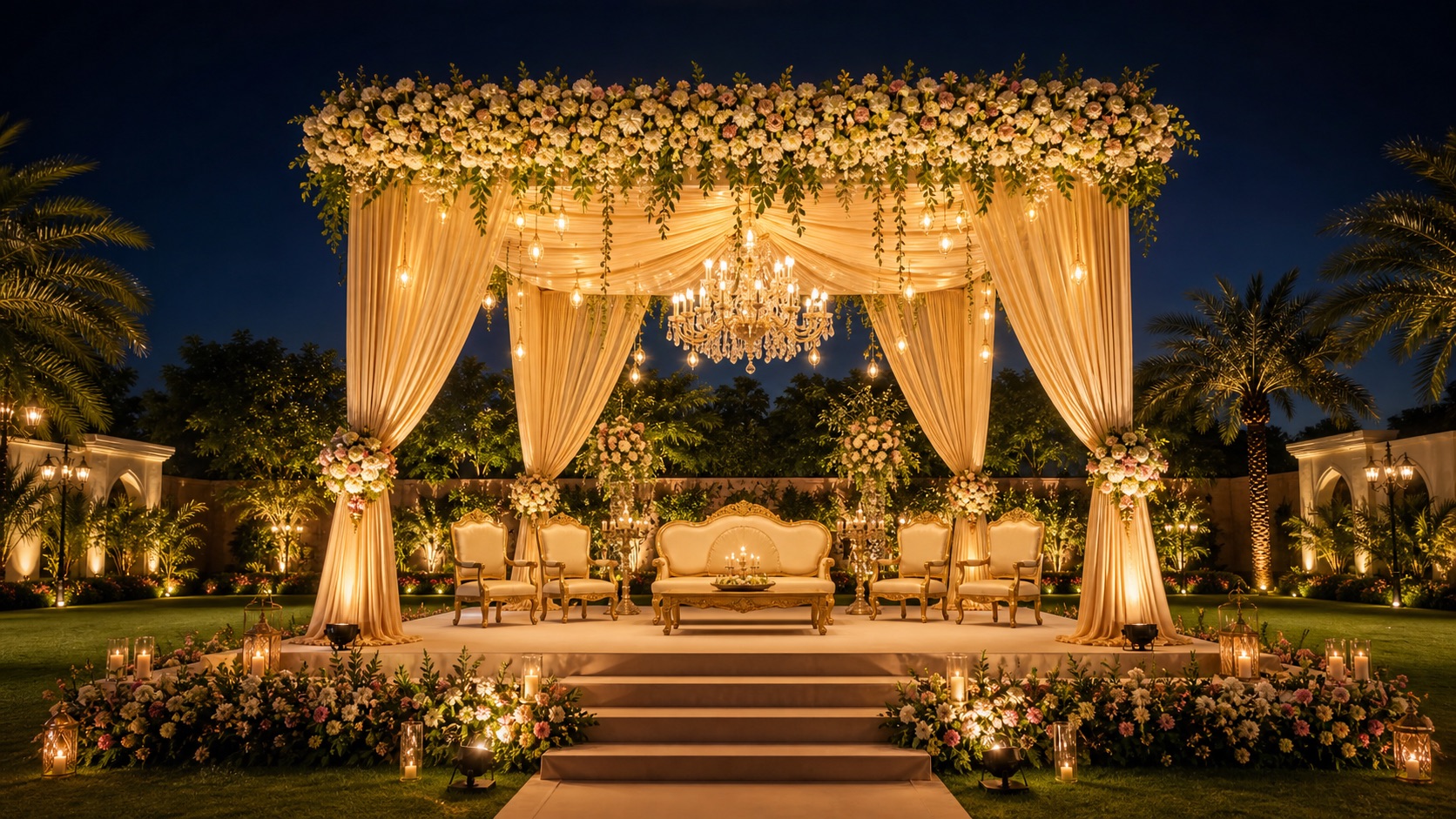
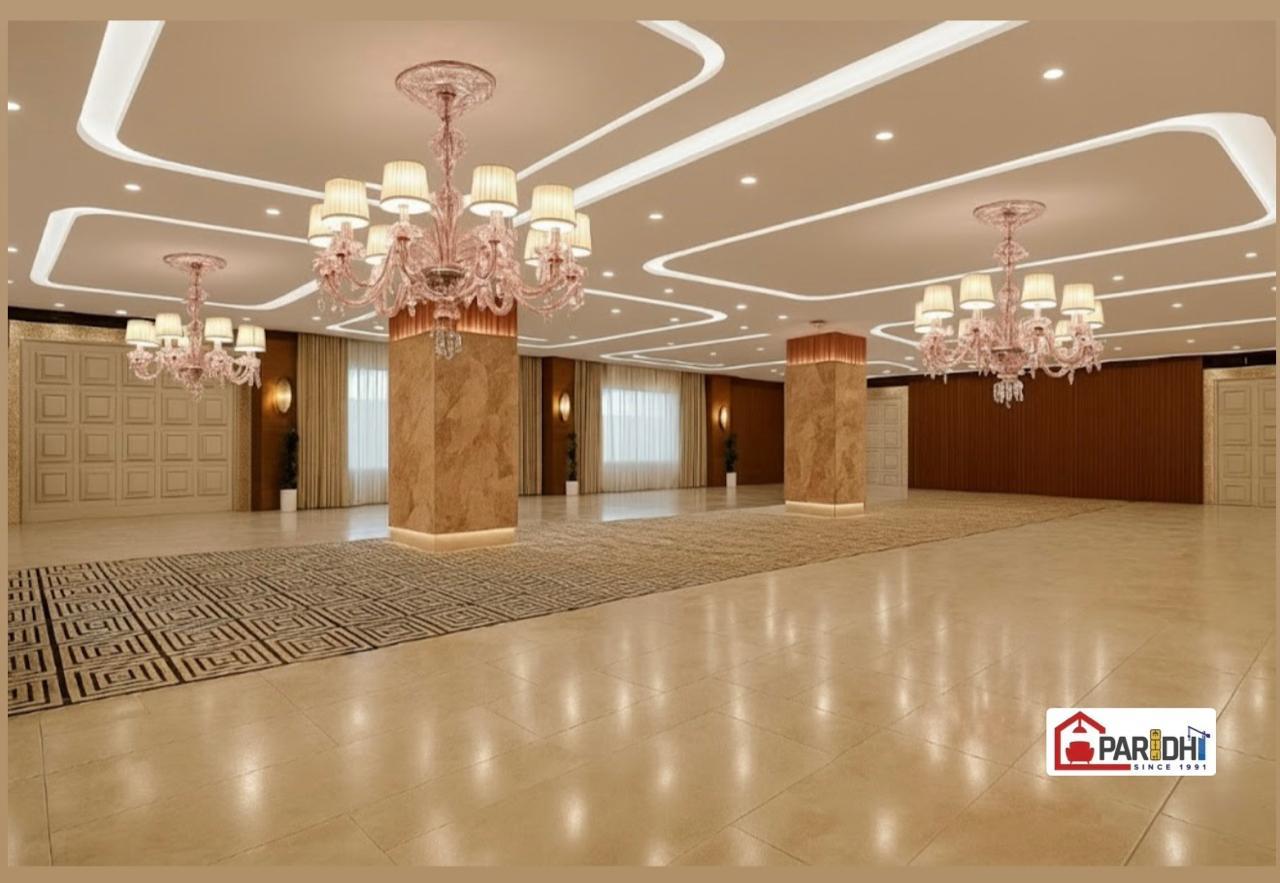
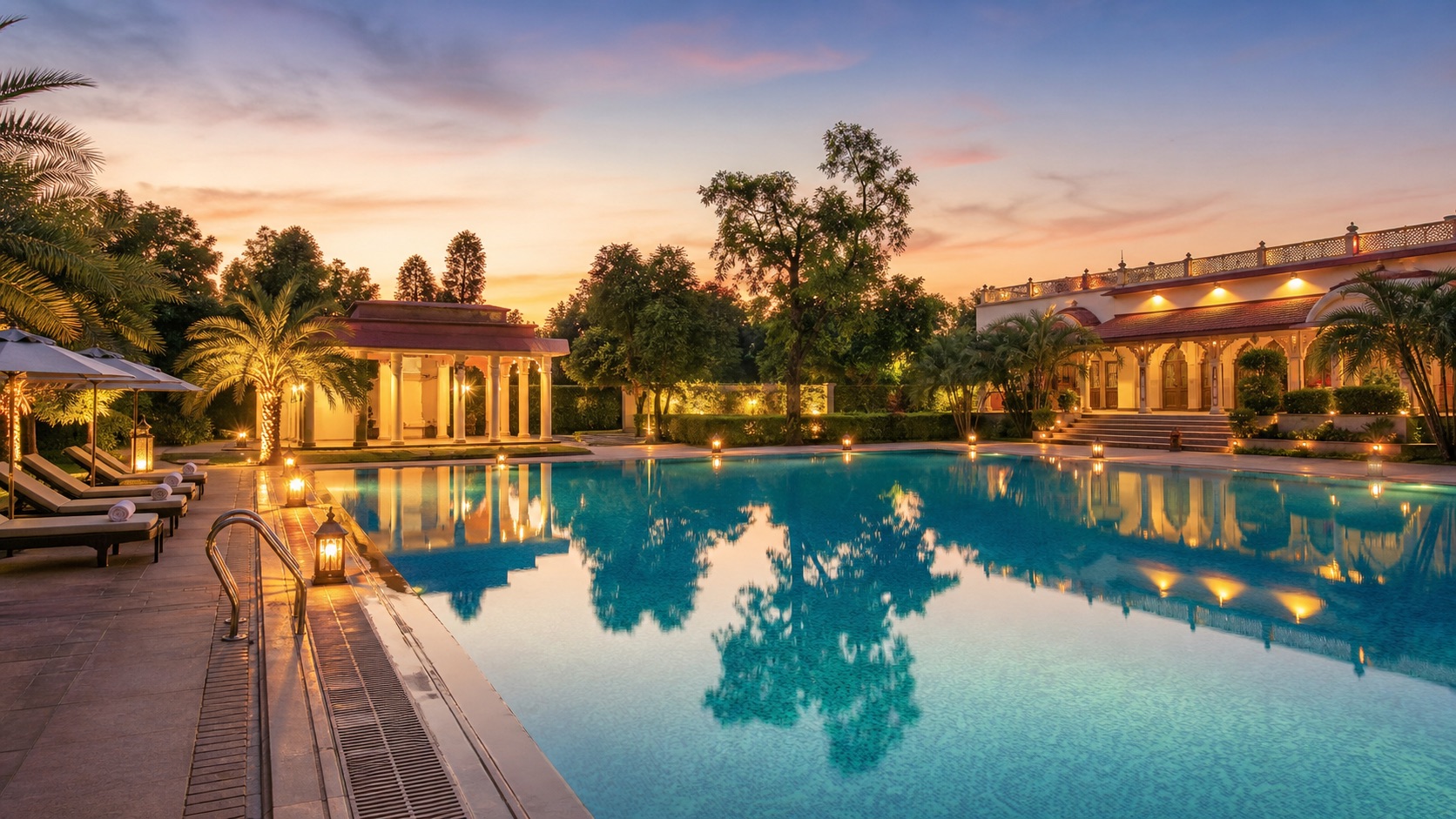
The Heritage Resort in Misrod hosts pre-wedding shoots on its own grounds: the poolside, the wedding lawn, the lamp-lit entry gate, the lobby and lounge, and the banquet hall under its chandeliers. A room on the property can be arranged for outfit changes, and there is parking for the couple and the crew.
You bring your own photographer. The resort provides the locations and the time. The hour before sunset through early evening is the slot to ask for, because the pool and the gate look their best once the property lights come on.
The resort is on the Hoshangabad Road side of Bhopal, the same side of the city as Bhojpur and Bhimbetka, which makes the morning-monument and evening-venue plan a practical one. Availability depends on the functions booked on the day, so send your date, your preferred time and the size of your crew on WhatsApp, or call +91 82697 88505.
Frequently asked questions
- Which are the best pre-wedding shoot locations in Bhopal?
- Inside the city, the Upper Lake, Gohar Mahal, Rani Kamlapati Palace, Van Vihar and Sair Sapata. Within about 46 km, Bhojpur, Bhimbetka, Sanchi and Raisen Fort. For privacy, outfit changes and shooting after dark, a private venue or resort is the practical addition, and most couples combine one heritage or lake location with one private one.
- Do you need permission for a pre-wedding shoot at a monument?
- It depends on the equipment. At monuments protected by the Archaeological Survey of India, visitors may take photographs, but a camera stand or extra lights need written permission from an archaeological officer, and filming needs a licence applied for at least three months ahead. A handheld camera is treated as ordinary visitor photography.
- Is a pre-wedding shoot allowed in Van Vihar?
- Photography is allowed, and professional photography is charged for, so confirm the arrangement at the entrance beforehand. The park is closed on Fridays and drones are not allowed.
- What is the best time of day for a pre-wedding shoot?
- The hour and a half before sunset, and the first hour after sunrise. Midday light is harsh and flat. In Bhopal the sunset falls at around a quarter to six in December and past seven in June, so the start time has to move with the month.
- Which month is best for a pre-wedding shoot in Bhopal?
- October to February. The air is clear after the monsoon, evenings are comfortable in heavy outfits and the grounds are still green into November. From April to June, shoot at sunrise only.
- How many locations can be covered in one day?
- Two. One public or heritage location in the morning and one private location at dusk is the plan that works. Three locations in a day means most of the good light is spent travelling.
- Where do we change outfits during the shoot?
- Public places and monuments have no changing facilities, so couples change in the car. A private venue can give you a room, which is why the outfit that takes longest to put on belongs at the private location.
- Can we use a drone for the shoot?
- Only where it is clearly permitted. Drones are not allowed in Van Vihar, and the rules around monuments and parts of the city are strict. At a private venue, ask the venue in advance.
- Can we do a pre-wedding shoot at The Heritage Resort?
- Yes. The resort hosts shoots on its poolside, lawn, entry gate, lounge and banquet hall, with a room for outfit changes. You bring your own photographer. Send your date, time and crew size on WhatsApp or call +91 82697 88505, since availability depends on the functions booked.
- How far ahead of the wedding should the shoot be?
- Four to eight weeks. That leaves time to edit the photographs and use them for invitations and a slideshow, without being so early that your look changes before the wedding.