
The short answer
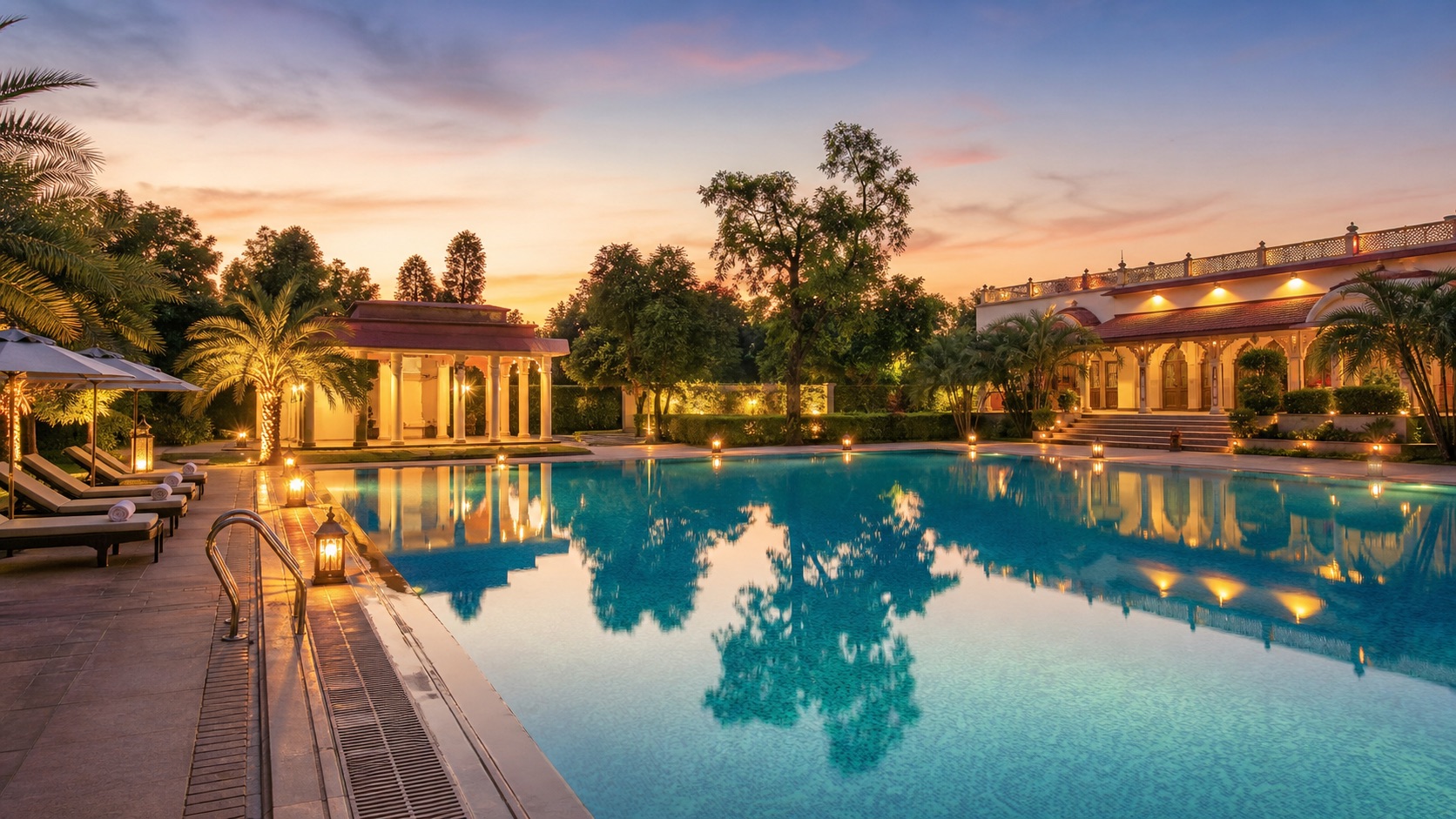
- The real difference is not luxury. It is layout: a hotel gives you a room inside a shared building, a resort gives you a property with outdoor space.
- If your wedding has a baraat, ask the hotel directly where it forms and where it processes. Many city hotels cannot host one properly, and this is the most common late discovery.
- A hotel is the better answer for a compact single-function winter wedding with mostly local guests, particularly if the family wants city shopping and short travel.
- A resort is the better answer for multi-day functions, for outdoor ceremonies, and when a large share of guests are staying over, because the rooms sit beside the function rather than on floors above it.
- Count the transfers, not the distance. A city hotel that is close to home can still involve more guest movement across three days than a resort further out that holds every function on one property.
- City venues are more likely to carry noise and closing-time constraints because of neighbouring residents. Ask for the actual cut-off time in writing before you book a sangeet or a DJ.
Families comparing a hotel banquet with a wedding resort usually frame it as a question about budget, or about which one is more impressive. It is neither. Both categories in Bhopal contain good venues and poor ones, and the price ranges overlap heavily.
The difference that actually affects your wedding is structural. A hotel banquet is a room inside a building you are sharing with other people. A resort is a property you have to yourself, with the sky above the ceremony. Everything that follows from that, the baraat, the outdoor pheras, where your guests sleep, how far they walk between functions, what time the music has to stop, comes from that one distinction.
This guide compares the two on the things that matter on the day rather than the things that photograph well, including a clear account of when a hotel is genuinely the better choice. It does not name specific venues.
What is the real difference between a wedding hotel and a wedding resort?
Strip away the marketing and the two categories differ on about six practical dimensions. Read down this table and the pattern is clear: a hotel optimises for convenience and a resort optimises for space and control.
| Dimension | City hotel banquet | Wedding resort |
|---|---|---|
| Exclusivity | You have a hall. Other guests share the lobby, lifts and corridors. | You generally have the property, or a clearly separated part of it. |
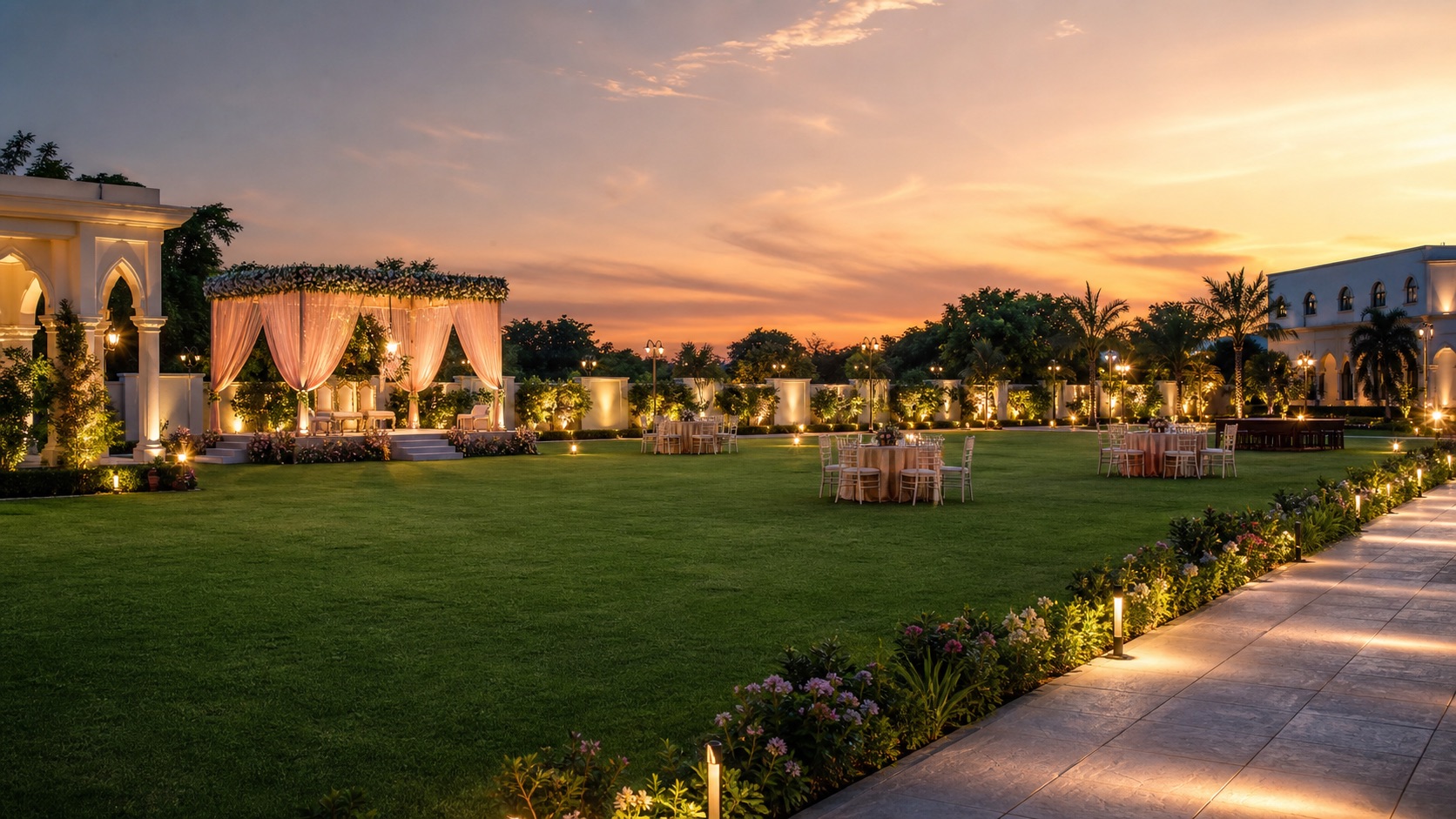
| Outdoor ceremony | Rarely possible. Most have no usable open ground. | The core offering. Pheras under open sky, lawn dining. |
| Baraat | Often constrained by the approach road, the porch and the neighbours. | A gate and a driveway the procession can actually use. |
| Guest rooms | Above the function, on floors, reached by lift. | Beside the function, usually a short walk at ground level. |
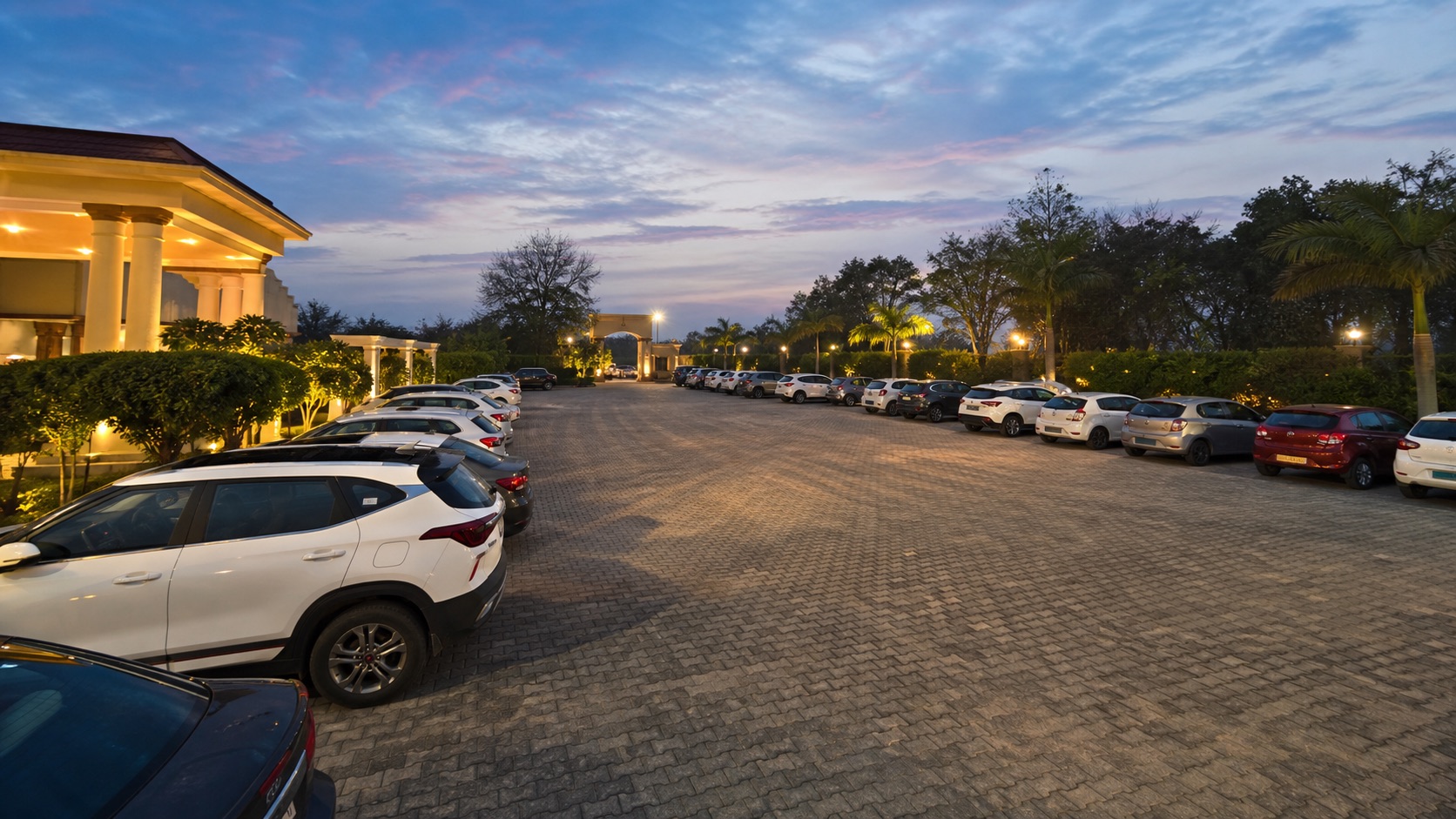
| Parking | Frequently valet, and shared with the hotel's other guests. | Usually the venue's own open parking, unshared on the day. |
| Noise and end time | More likely to be limited, because of resident guests and neighbours. | Fewer constraints, though never assume none. Ask. |
| Travel for guests | Short if guests are local and the hotel is central. | Longer to reach, then near zero between functions. |
Can a city hotel host a baraat?
This is the question families forget to ask and then discover six weeks before the wedding, when the decorator raises it.
A baraat needs three things: somewhere for the procession to gather, a stretch it can actually move along at walking pace with a band and dancing, and a gate or entrance to arrive at. A city hotel typically has a porch, a service road and a public road with traffic on it. What you often get in practice is a compressed version: the procession forms in the car park, moves twenty or thirty metres, and arrives. It works, and plenty of families do it happily, but it is not the baraat most families are picturing when they book.
A resort with a driveway and a gate gives the procession room to be a procession. If the baraat matters to your family, and in most Bhopal weddings it matters a great deal, ask any hotel to walk you the exact route. Do not accept a reassurance. Walk it.
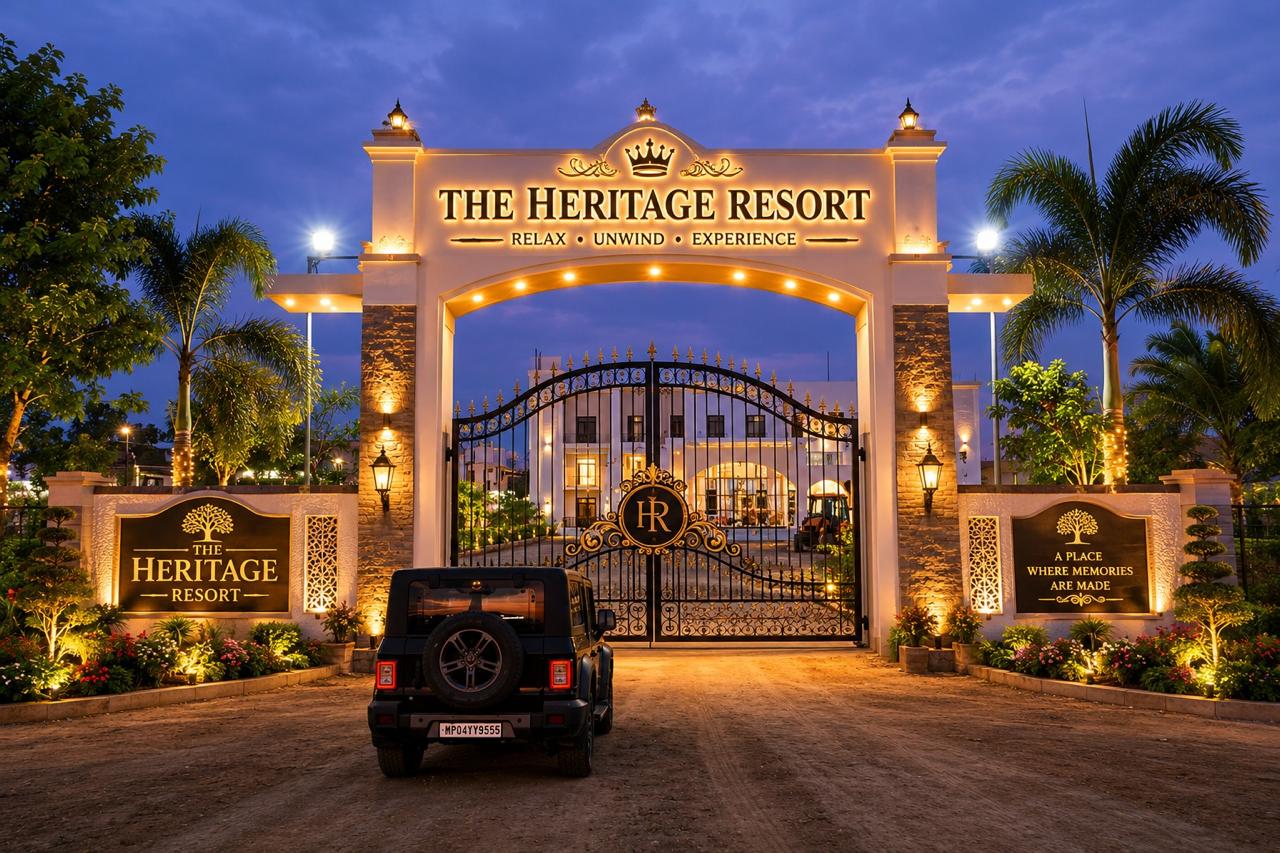
Ask any venue to walk you the baraat route in person. A description and the actual thirty metres of usable road are very different answers.
When is a hotel actually the better choice?
Plenty of guides written by resorts never answer this honestly, so here it is. There are wedding shapes where a city hotel is straightforwardly the right decision, and choosing a resort would be the mistake.
- A single function rather than a series. If the wedding is essentially one evening, a reception or a compact ceremony and dinner, the resort's main advantage disappears. That advantage is holding several functions in one place, and a one-function wedding does not need it.
- Mostly local guests. If nearly everyone is driving home the same night, on-site rooms are not doing much for you, and a central location saves every guest a journey.
- Winter, with no outdoor plan. If you have chosen an indoor wedding on a December date and do not want a lawn at all, the resort's garden is capacity you are not using.
- Guests who want the city. Outstation family who plan to shop, sightsee or visit relatives around the wedding are better served by a central base than by a property outside town.
- A tight schedule with airport or station runs. If large numbers are arriving and leaving on the day itself, a central location genuinely reduces the logistics.
When is a resort the better choice?
The mirror image, and it comes down to one thing more than any other: how many functions you are holding and how many guests are staying over.
A wedding is rarely one event in Bhopal. Haldi, mehndi, sangeet, the ceremony itself and a reception can spread across two or three days. Held at a resort, they happen in the same place, and the gap between them is a walk. Held at a city hotel, some of them will happen elsewhere, at home, at a second banquet or at a relative's house, and every one of those splits means transport, timing risk and a set of guests who miss something because they could not get across town.
The second factor is the outdoor ceremony. If the pheras under open sky matter to your family, or a lawn dinner does, the question is largely settled before you compare anything else. Most city hotels simply cannot offer it.
The third is guest accommodation, and it is more than a convenience. Rooms on the same property as the function mean the family can get ready near the mandap, elders can withdraw and rest mid function rather than enduring or leaving, and nobody is driving home at one in the morning after a late reception.
How many transfers does your wedding actually involve?
Here is a more useful calculation than distance, and one almost nobody does before booking.
Take your function list. For each one, count how many separate guest journeys it creates. A resort wedding with three functions and guests staying on site is often three arrivals and three departures in total across the whole wedding. The same wedding at a city hotel, with the haldi at home and the sangeet at a different hall, can easily be ten or twelve separate guest movements, each one with elderly relatives to organise, cars to arrange and a window where somebody gets lost or arrives late.
That is the real cost of a central location, and it is invisible when you are comparing venues on a map. A resort that takes thirty minutes to reach once can involve far less total guest travel than a hotel ten minutes away that you will drive to and from six times.
What about noise, music and closing times?
This one catches families out after they have paid the advance, and it is worth raising early with any venue in either category.
A venue with residential neighbours or with its own resident guests has a reason to limit sound levels and to end the music at a set hour. That reason does not disappear because your sangeet is going well. City venues carry this constraint more often, simply because of where they sit, but it is not universal and no venue type is automatically free of it.
Ask two specific questions of any venue. What time does the music have to stop, and is that a hotel policy or a legal restriction? The answers differ, and one of them is negotiable while the other is not. Get it in writing either way, because a verbal assurance at the booking stage is worth very little at eleven at night with three hundred guests on the floor.
Which should you book?
The decision usually resolves quickly once you stop comparing venues and start describing your own wedding. Work down this table and take whichever column collects more of your answers.
| Book a city hotel if | Book a resort if |
|---|---|
| The wedding is essentially one function | You are holding functions across two or more days |
| Almost all guests are local and going home | A significant number of guests are staying over |
| You want an indoor wedding and no lawn | The ceremony or dinner should be under open sky |
| The baraat is short or not a priority | The baraat matters and needs a real route |
| Guests want to shop and see the city | You want everyone in one place for the whole wedding |
| Many guests fly or take trains on the day itself | Guests arrive the day before and settle in |
Stop comparing venues and describe your own wedding instead. The number of functions and the number of guests staying over settle this question faster than any site visit.
How much setup time do you actually get?
This is the difference nobody mentions on a site visit, and it shapes what your wedding looks like more than almost anything else you will compare.
A decorator cannot build an elaborate setup in four hours. Mandaps, floral structures, drapes, lighting rigs and stage backdrops take a day to install properly, sometimes more. How much time your decorator gets is decided entirely by what the venue is doing with that space either side of your booking.
A city hotel banquet is a revenue-generating room. It may well have a function the evening before yours and another the evening after. That often means access from the morning of your wedding and a hard clearing deadline that night. Decorators know this and design within it, which is why hotel weddings tend towards setups that can go up fast: draping, lighting, modular backdrops, arrangements that arrive pre-assembled.
A resort lawn is less likely to be turning over daily, particularly outside peak weekends, so previous-day access is more often available. That is what makes the large built mandap and the elaborate floral structure practical. It is not that resorts have better decorators. It is that they can offer the hours those structures need.
So ask the question directly and early, before you commission any design: from what hour can my decorator start, and by what hour must everything be cleared? Then tell your decorator the answer before they draw anything. A design commissioned without that constraint is a design that gets cut down on the day.
Ask what hour your decorator can start and what hour everything must be out. Then give your decorator that answer before they design anything, not after.
What to establish before you sign with either
The same short list works for both categories and settles most of the questions this guide has raised. Work through it on the site visit rather than over the phone, because several of these can only be answered by walking the space.
- 01
Walk the baraat route
Where it gathers, where it moves, where it arrives. Do this on foot. It is the check that most often changes a decision.
- 02
Establish the setup and clearing hours
From when can the decorator start and by when must everything be out. This decides what your decor can physically be.
- 03
Ask what else is booked that day
Whether another function shares the property or the building, and what the two parties share. Parking, entrances and lifts are the usual answers.
- 04
Get the music cut-off in writing
And establish whether it is venue policy or a legal restriction, because only one of those can be discussed.
- 05
Count the guest journeys
Walk through your full function list and count arrivals and departures. Compare the total between your two shortlisted venues rather than comparing their distances from home.
- 06
Locate the weather fallback
For an outdoor plan, find the indoor space, walk to it from the lawn, and time that walk with your actual guest count in mind.
How do outstation guests experience each one?
Worth thinking about separately, because outstation guests carry the largest share of the inconvenience at any wedding and have the least ability to fix it themselves.
At a city hotel they arrive at a familiar kind of place, with a lift, a reception desk and a room upstairs. They can walk out to a market. What they cannot do easily is be part of the wedding in the hours between functions, because the functions may be scattered and they do not have a car.
At a resort they are on the property for the duration. The trade is real: less to do between functions, further from the city, and if a guest needs to leave early it is a longer journey. What they get is the wedding itself, continuously, without arranging a single vehicle. For relatives who have travelled a long way to be at a wedding rather than to visit a city, that is usually the better trade, and it is the reason the resort format has grown.
If you have a mix, and most families do, the useful move is to ask which group is larger and to solve for them, then handle the smaller group deliberately rather than hoping it works out.
Where The Heritage Resort sits in this comparison
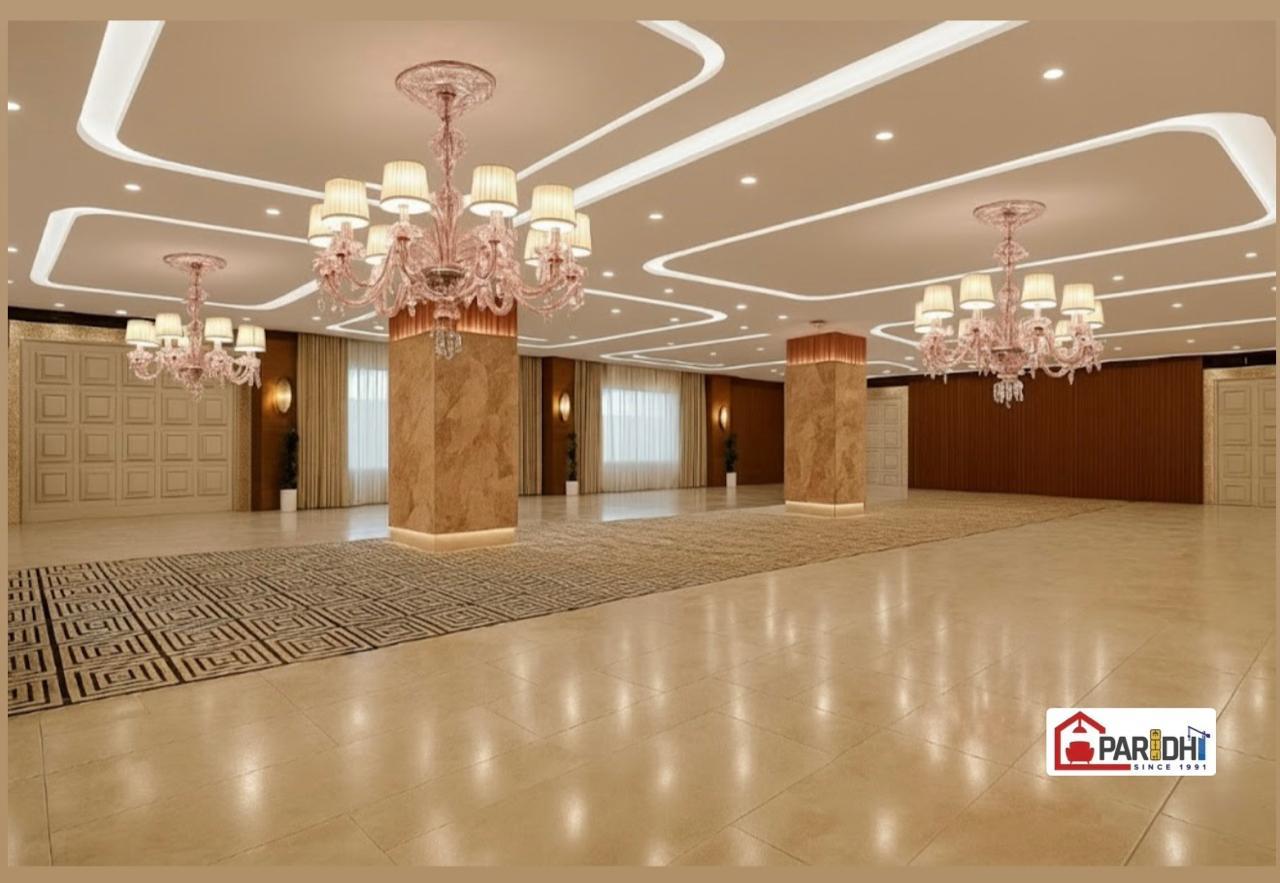
The Heritage Resort in Misrod is a resort in the sense this guide has used throughout: a property rather than a room inside one. There is an open-air marriage garden that holds 1000 or more guests, an air-conditioned banquet hall for the functions that want a room, guest rooms on the property, in-house catering and parking for 200 or more cars.
In practice that means the shapes described above are available together. The baraat has a gate and a driveway. The pheras can happen under open sky with the hall as a fallback. Family staying on site are beside the function rather than above it. And because the hall and the garden are on the same grounds, a wedding that runs across several days does not move anywhere in between.
It sits off Hoshangabad Road near 11 Mile and Indus Towne, so it is out of the city centre in the way this guide describes, with the trade that involves. If your wedding is a single indoor evening for local guests, a central venue may genuinely suit you better, and this comparison has tried to say so plainly. To check a date, send it with your guest count and function list on WhatsApp, or call +91 82697 88505.
Frequently asked questions
- Is a wedding hotel or a wedding resort better in Bhopal?
- Neither is better in general. A hotel suits a single-function wedding with mostly local guests and no outdoor plans. A resort suits multi-day functions, an outdoor ceremony, and weddings where a significant number of guests are staying over. Count your functions and your staying guests, and the answer usually settles itself.
- What is the actual difference between a hotel banquet and a resort?
- Layout and exclusivity rather than luxury. A hotel banquet is a room inside a building shared with other guests, so lobbies, lifts and parking are shared and outdoor space is rare. A resort is a property with open ground, its own parking and rooms beside the function rather than on floors above it.
- Can you have a baraat at a city hotel in Bhopal?
- Sometimes, but often in a compressed form. A baraat needs a gathering point, a stretch it can move along with a band, and a gate to arrive at. Many city hotels have a porch and a public road instead. Ask the venue to walk you the exact route in person rather than accepting a description.
- Are marriage hotels in Bhopal cheaper than resorts?
- The ranges overlap heavily and neither category is reliably cheaper than the other. What changes the total far more than the venue type is your guest count, the number of functions, how many meals are served and how many rooms you need. Compare two specific quotes on the same list of inclusions rather than comparing categories.
- Do wedding resorts in Bhopal have rooms for guests?
- Many do, and it is one of the main reasons families choose the format. Rooms on the property mean the family gets ready near the ceremony, elders can rest during a long function, and nobody drives home late after a reception. Confirm how many rooms are available on your date, since this varies.
- Is a resort too far out for guests arriving on the wedding day?
- It can be, and this is the strongest argument for a central venue. If large numbers are arriving or leaving by train or flight on the day itself, a central location genuinely reduces the logistics. If guests arrive the day before and stay, the distance is travelled once and stops mattering.
- Are there restrictions on music and end times at wedding venues?
- Often, and more commonly at venues with residential neighbours or resident guests. Ask two questions of any venue: what time the music must stop, and whether that is a venue policy or a legal restriction. One is negotiable and the other is not. Get the answer in writing at the booking stage.
- Which is better for a two or three day wedding?
- A resort, in almost every case. The advantage is holding every function in one place, so the gap between them is a walk rather than a convoy. A multi-day wedding split across a hotel, a home and a second hall creates many separate guest journeys, and each one is a chance for elderly relatives to be left behind or arrive late.
- Does The Heritage Resort have both indoor and outdoor wedding spaces?
- Yes. There is an open-air marriage garden for 1000 or more guests and an air-conditioned banquet hall on the same property, along with guest rooms, in-house catering and parking for 200 or more cars. Call +91 82697 88505 or send a WhatsApp enquiry with your date, guest count and function list.