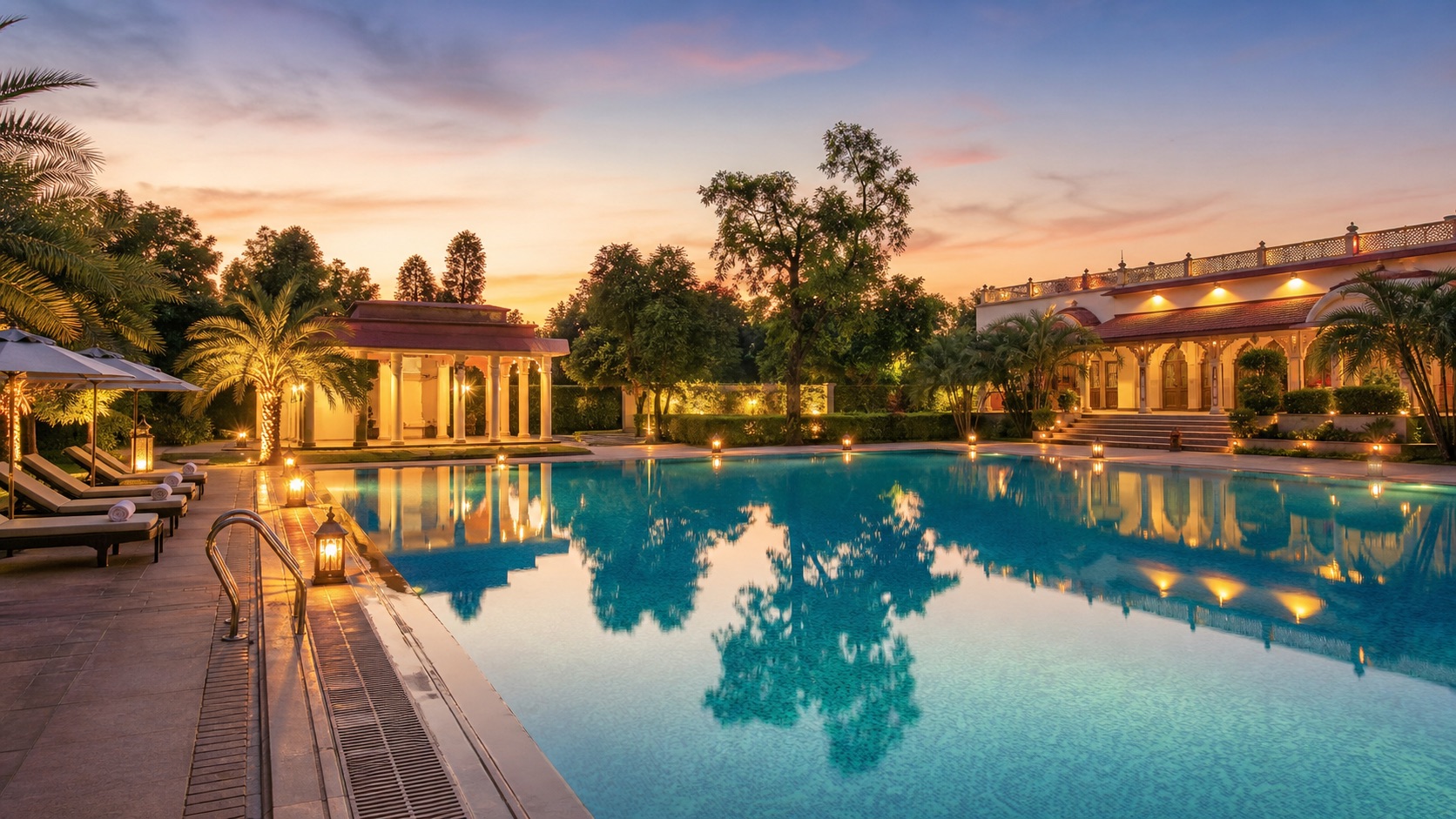

The short answer
- Late October to February is the reliable window for an evening outdoor wedding in Bhopal. That is roughly four months out of twelve.
- Judge a date by its evening temperature, not the daytime forecast. Almost every wedding function runs after dark, and a 38 degree afternoon in March can become a pleasant 22 degree evening.
- March is the last comfortable outdoor month in most years. From April to mid June, an evening lawn function needs cooling, later timings and a realistic indoor fallback.
- The pleasant months and the muhurat months are the same months, because wedding dates resume after Chaturmas in November. That is why good lawns are booked eight to twelve months ahead for November to February.
- Daytime functions follow the opposite rule. A haldi or mehndi outdoors is comfortable in January and difficult in May, when the evening may work but the afternoon will not.
- Wind and dust, not heat, are what usually damage an outdoor setup in April and May. Ask any venue where its lawn sits relative to open ground before booking a dry-season date.
If you want a straight answer: late October to February. Those are the months when an evening function on a lawn in Bhopal is genuinely comfortable, when your guests will not be fanning themselves through the pheras, and when the decor will still be standing at midnight. That is about four months out of twelve.
The rest of the year is not off limits, but it changes what you have to plan for. March is usually still fine. April and May are hot enough that an outdoor evening function needs cooling, later timings and a serious indoor fallback. From late June to September, the monsoon makes an uncovered lawn a gamble rather than a plan.
This guide goes through the whole year honestly, including the months most venues would rather not discuss, and covers the part families usually discover too late: that the four good months are also the four months when every other family in Bhopal is trying to book the same lawn.
Which months actually work for an outdoor wedding in Bhopal?
Bhopal has a fairly clean three-season year. A dry, pleasant winter, a hot and dusty pre-monsoon spring, and a wet monsoon. Each one does something specific to an outdoor function, and the differences are large enough that the same lawn is a different venue in January and in May.
The table below is written for an evening function, because that is when almost every wedding ceremony and reception in Bhopal actually happens. Daytime functions are covered separately further down, and the answers are not the same.
| Month | Evening conditions | Verdict for a lawn function |
|---|---|---|
| November | Cool and dry, comfortable from sunset onwards | Ideal. Also the most contested month for dates. |
| December | Cold after dark, can drop sharply late at night | Ideal, but plan for warmth. Guests will want the function to keep moving. |
| January | Coldest evenings of the year in Bhopal | Excellent for decor and comfort. Elderly guests need seating out of the wind. |
| February | Mild and dry, the most forgiving month of all | Ideal. Neither heat nor cold is working against you. |
| March | Warming through the month, evenings still pleasant early on | Good in the first half. Judge the second half date by date. |
| April | Hot, and the evening stays warm well past sunset | Difficult. Needs cooling, a later start and an indoor fallback. |
| May | The hottest month. Daytime routinely crosses 40 degrees | Hardest month of the year for an outdoor evening function. |
| June | Hot and increasingly humid until the monsoon arrives | Difficult, with rain risk building through the month. |
| July | Monsoon. Heavy rain likely | Not advisable uncovered. Also outside the muhurat window. |
| August | Monsoon continues, high humidity throughout | Not advisable uncovered. Also outside the muhurat window. |
| September | Rain easing but still present, humid | Unpredictable. A covered structure is essential. |
| October | Post-monsoon, cooling through the month | Good from mid October onwards, and improving every week. |
Why evening temperature matters more than the daytime forecast
This is the single most common mistake families make when picking a date, and it cuts both ways.
Bhopal has a large gap between its daytime high and its evening temperature for much of the year, because it sits on a plateau and the air is dry through the winter and spring. A March afternoon that reads 36 or 38 degrees can settle into a genuinely pleasant evening by the time a baraat arrives at eight. Families look at the afternoon figure, panic, and book a hall they did not need.
The same gap works against you in reverse in December and January. A comfortable 26 degree afternoon becomes a cold evening, and by the time the pheras run late into the night, guests in light clothing are uncomfortable. Winter weddings in Bhopal are wonderful, but a December date needs the same amount of thought as an April one, just about a different problem.
When you are judging a date, ask for the evening conditions at the hour your function will actually run. If you are visiting a venue to decide, visit at that hour too. A lawn at two in the afternoon tells you almost nothing about the same lawn at nine at night.
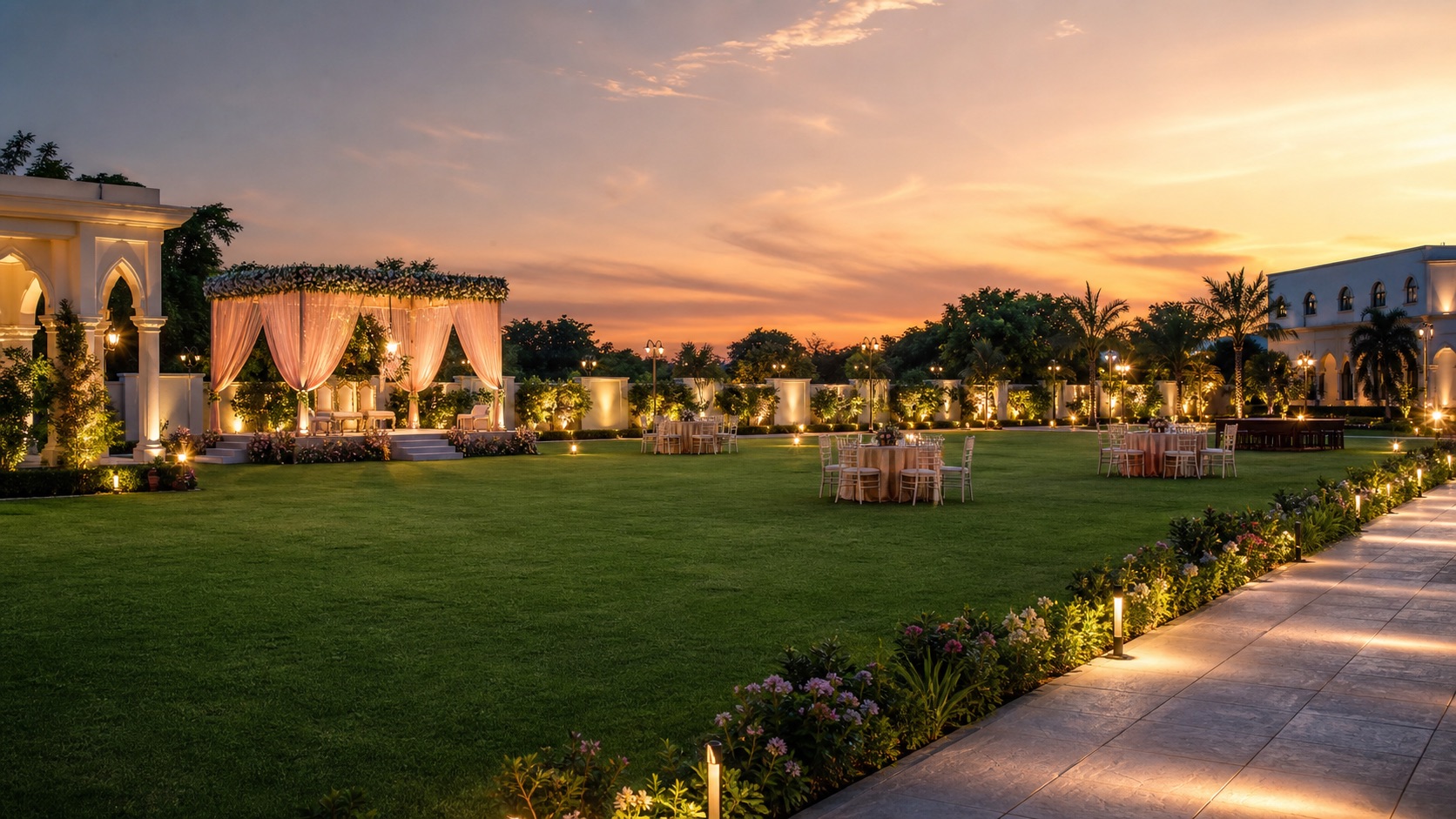
Judge a wedding date by the temperature at the hour your function runs, not by the afternoon high. In Bhopal the two can be fifteen degrees apart.
What happens to an outdoor wedding in March, April and May?
These are the months families most often ask about, usually because a muhurat date has landed in them or because the good winter dates were already gone.
The heat is the obvious problem, and it is manageable. The less obvious problem, and the one that actually ruins setups, is wind and dust. Bhopal gets dry, gusty afternoons through the pre-monsoon period. That wind lifts dust off any open ground nearby and carries it across a lawn, and it pulls at exactly the things a wedding depends on: floral arrangements, drapes, backdrops, the mandap canopy, table settings, and anything lightweight near a walkway.
A venue with mature trees, a boundary wall and planted ground on its perimeter handles this far better than a bare lawn with open land beside it. This is a question worth asking directly on a site visit, because it is invisible in photographs and no venue volunteers it.
- Start later. Pushing a function back by even an hour makes a substantial difference in April and May, because the ground and the air are both still releasing heat immediately after sunset.
- Cool the seating, not the lawn. You cannot cool an open space, but you can make the places where guests sit and queue comfortable with coolers and shaded, ventilated areas.
- Keep the catering counters out of the wind line. Dust on an open buffet is the complaint guests remember, and it is a placement decision more than an equipment decision.
- Weight everything. Anything that can be lifted by a gust will be. Tell your decorator the date is in the dry season and let them plan the structure accordingly.
- Book a venue that has an indoor room, and agree in advance at what point you would move. A fallback you have not discussed is not a fallback.
Can you hold an outdoor wedding during the monsoon?
In practice this question rarely arises for the ceremony itself, because of a calendar overlap most families discover only when they start looking for dates. The traditional Chaturmas period, running roughly from Devshayani Ekadashi in the monsoon to Devuthani Ekadashi in November, contains very few auspicious wedding dates. So the wettest months are also the months with almost no muhurats in them.
Where it does arise is for the surrounding functions and for the receptions that families hold outside the muhurat calendar, and for engagements and roka ceremonies, which are not bound by the same dates.
For those, an uncovered lawn in July or August is not a plan. A covered structure changes the answer completely, and a venue with a proper indoor hall changes it more. The humidity is the second issue and the one people forget: even without rain, an August evening outdoors in Bhopal is heavy, and guests who are dressed formally feel it quickly.
Do daytime functions follow the same rules?
No, and this catches people out. Haldi, mehndi and many roka ceremonies happen in daylight, and the seasonal logic for a daytime function is close to the opposite of the evening one.
A January morning on a lawn is one of the most pleasant settings Bhopal offers. A May morning is already difficult by ten, and by noon it is genuinely unpleasant for guests sitting through a ceremony. Meanwhile a May evening, with cooling and a late start, can be made to work. So a family with a summer wedding date often finds the evening functions easier to solve than the daytime ones.
| Season | Daytime function | Evening function |
|---|---|---|
| November to February | Excellent. The best time of year for a haldi or mehndi on a lawn. | Excellent, with warmth planned for December and January nights. |
| March | Good early in the month, warm by the end of it. | Good. Usually the last comfortable month without intervention. |
| April to mid June | Difficult. Shade is essential and midday should be avoided entirely. | Workable with cooling, a late start and an indoor fallback. |
| Late June to September | Rain and humidity make it unreliable. | Needs a covered structure or an indoor room. |
| October | Improving through the month, good by the second half. | Good from mid October, excellent by the end. |
Why the best season is also the hardest to book
Here is the part that turns a weather question into a planning question. The comfortable months and the auspicious months are the same months.
Wedding dates resume after Chaturmas in November and then run through to roughly March, with a further set of dates later in spring. That means the November to February window carries both the good weather and the bulk of the year's muhurats. Every family working from the same panchang is looking at the same handful of dates, and there are only so many good lawns in Bhopal.
The practical consequence is that for a November to February wedding, the popular venues are commonly booked eight to twelve months ahead, and the single most contested dates go earlier than that. If you are planning a winter wedding, the venue is the first thing to fix, before the decorator, the caterer and the photographer, because every one of those bookings depends on the date the venue can give you.
It also means flexibility is worth more than it feels. Families who arrive with three possible dates rather than one get materially better options, and often a better venue, than families who have committed to a single date before they started looking. Ask your family pandit for a range rather than a single answer.
- 01
Get a range of dates, not one date
Ask for two or three possible muhurats. This is the highest-leverage thing you can do, and it costs nothing.
- 02
Fix the venue before any other vendor
The date anchors everything else. Decorators and caterers can be booked around a confirmed venue; the reverse rarely works in peak season.
- 03
Start twelve months out for a winter date
For November to February, this is not early. For the most contested dates it is already late.
- 04
Ask what else is booked that day
Some venues run more than one function on a date. Establish whether the lawn is exclusively yours.
- 05
Confirm the weather fallback in writing
Agree which indoor space is held for you, and who decides to move and by when.
In peak season the date decides the venue, not the other way round. Bring three possible dates and you will get a better venue than families who bring one.
How to judge a lawn before you book it
Photographs of a lawn are taken in February at golden hour. They tell you what the venue looks like at its best, which is useful and incomplete. A few checks tell you how it will behave on your actual date.
- Visit at your function's hour. This is worth repeating because it is the check most families skip and the one that reveals the most.
- Look at what borders the lawn. Open ground on the windward side means dust in the dry months. Mature trees and a planted boundary mean shelter.
- Ask where the guests wait. Every outdoor function has a gap between arrival and seating, and in April or December that gap is where comfort is won or lost.
- Find the indoor space and walk to it. If the fallback is a ten minute walk or a separate building, it is not a real fallback for four hundred guests in sudden rain.
- Check the ground itself. Level, well-kept turf matters more than acreage, particularly for elderly guests and for anyone in heels.
- Ask about lighting. A lawn that photographs well in daylight can be poorly lit after dark, and every one of your functions is after dark.
How does the season change your wedding photographs?
Couples plan the date around comfort and around the panchang, and then discover on the day that the season also decided what their photographs look like. It is worth knowing in advance, because a small change to the running order can matter more than anything the photographer does.
The first factor is when the sun sets, and it moves by roughly ninety minutes across the year in Bhopal. In December the light is gone by around a quarter to six. In June it holds past seven. A function that starts at seven in the evening is a fully lit night function in winter and a golden hour function in early summer, and those produce completely different albums. If outdoor couple photographs matter to you, ask your photographer what time the usable light ends on your specific date and build the schedule backwards from it rather than fitting photographs into whatever gap remains.
The second factor is the quality of the light rather than the quantity. The winter months give clean, low, warm light in the last hour of the day, which is the best natural light a Bhopal lawn will ever offer. The dry pre-monsoon months carry dust in the air, which softens and flattens everything and takes the colour out of a sunset. The post-monsoon weeks in late September and October are the opposite: the air is washed, the light is clear and the grounds are still green from the rain, which is why October has quietly become a popular month for pre-wedding shoots even though it is a thin month for weddings themselves.
The third is simply what is growing. A lawn in February is at its best. The same lawn in late May, after two months of heat, is a harder thing to photograph however well it is maintained. None of this should change a muhurat date, but it should change where you place the couple portraits in the running order.
The sunset moves by about ninety minutes across the year in Bhopal. Ask what time the light goes on your date, then build the running order backwards from it.
Planning an outdoor wedding at The Heritage Resort
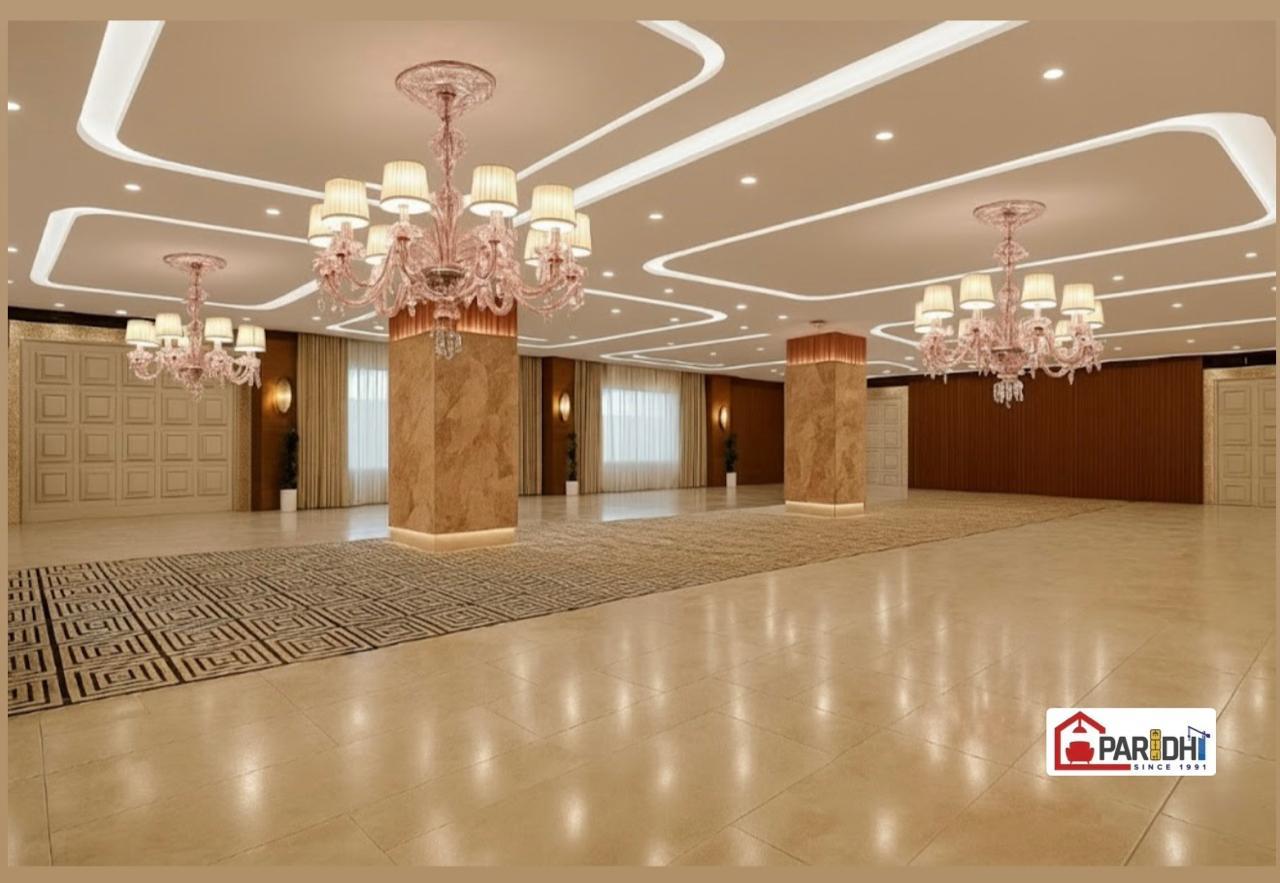
The Heritage Resort in Misrod has an open-air marriage garden that holds 1000 or more guests, and an air-conditioned banquet hall on the same property. That combination is what makes the calendar flexible rather than fixed.
For a November to February wedding, the garden does what a Bhopal winter does best: the baraat comes through the gate, the pheras happen under open sky, and dinner runs on the lawn. For an off-season date, the same wedding can move indoors, or run on the lawn with the hall held as an agreed fallback rather than an improvised one. Because both spaces are on one property, a change of plan on the day does not mean moving guests to a second location.
In-house catering, on-site rooms for family and parking for 200 or more cars sit alongside both settings, so the season decision does not change the rest of the logistics. To check a date, send it with your guest count on WhatsApp or call +91 82697 88505.
Frequently asked questions
- What is the best month for an outdoor wedding in Bhopal?
- February is the most forgiving, because neither heat nor cold works against you. November and January are equally good for conditions, though December and January evenings get cold late at night and February does not. All four are strong choices for an evening lawn function.
- Can you have an outdoor wedding in Bhopal in April or May?
- Yes, but it needs planning rather than optimism. Start the function later, cool the seating and queueing areas rather than trying to cool the lawn, keep catering counters out of the wind line, and book a venue with an indoor hall as an agreed fallback. May is the hardest month of the year for it.
- Is a lawn wedding possible during the monsoon?
- For the ceremony this rarely comes up, because the monsoon months fall inside Chaturmas and contain very few auspicious dates. For receptions, engagements and other functions not bound by muhurats, an uncovered lawn is a gamble in July and August. A covered structure or an indoor hall is essential.
- How far in advance should I book a marriage garden in Bhopal?
- For a November to February date, eight to twelve months ahead, and earlier for the most popular muhurats. Those months carry both the good weather and the bulk of the year's wedding dates, so demand concentrates hard. Off-season dates can often be arranged with much less notice.
- Should I judge a venue by the daytime or the evening temperature?
- The evening, because that is when your function runs. Bhopal has a large gap between afternoon highs and evening conditions for much of the year, so a March afternoon that looks alarming on a forecast often becomes a comfortable evening. Visit any venue at the hour your function will actually take place.
- Are daytime functions like haldi and mehndi affected differently?
- Yes, and often in the opposite direction. A winter morning on a lawn is ideal, while a May morning is difficult by ten and unpleasant by noon. Families with summer wedding dates usually find the evening functions easier to solve than the daytime ones, so plan haldi and mehndi timings around shade.
- What damages an outdoor wedding setup more, heat or wind?
- Wind, in the dry pre-monsoon months. Gusty afternoons lift dust off open ground and pull at drapes, floral work, backdrops and the mandap canopy. Ask a venue what borders its lawn, because a planted, sheltered boundary behaves very differently from open land next door.
- Do I need an indoor backup for a winter wedding in Bhopal?
- Rain is unlikely in the winter months, so the backup matters less for weather than it does in other seasons. It still helps for cold late evenings and for elderly guests who need somewhere sheltered to sit, so a venue with an indoor room remains worth having even on a January date.
- Does The Heritage Resort have both outdoor and indoor wedding spaces?
- Yes. There is an open-air marriage garden for 1000 or more guests and an air-conditioned banquet hall on the same property, so a function can run outdoors, move indoors, or use the hall as an agreed fallback without relocating guests. Call +91 82697 88505 or send a WhatsApp enquiry with your date and guest count.