
The short answer
- Decide in this order: what the event is for, the headcount, the date, then the venue. Most teams choose the venue first and bend everything else to fit it.
- In the 2026-27 season, wedding dates run from 21 November to mid-December and resume in mid-January. Kharmas, from 16 December to 14 January, has none, which makes it the easiest winter window to book a venue for a company event.
- Count people, not employees. With families invited, one employee is often three or four places at dinner.
- Give the venue an expected headcount and a ceiling, and ask what happens between the two.
- The programme starts when the last bus arrives. Fix the transport first and work the stage schedule back from it.
- Keep the stage programme to about ninety minutes, and open the food counters before it ends.
A company annual day is one of the larger events most HR teams will ever run, and they usually run it once a year with nobody who did it last time. The result is that the same three things go wrong at most of them. The date clashes with the wedding season and the venue is gone. The headcount on the day is a third higher than the one the caterer was given. And the programme starts ninety minutes late because the shift had not ended.
The answer to all three is the order in which you decide things. Fix what the event is for, then the headcount, then the date, and only then the venue. Most teams do it the other way round, falling for a venue first and bending everything else to fit.
This guide gives that order as a checklist. It starts with one piece of calendar knowledge that makes more practical difference in Bhopal than anything else: the weeks of the year when wedding venues are standing empty.
When is the best time of year to hold a company event in Bhopal?
Large company events and weddings compete for the same lawns and halls, and weddings book earlier. So the first thing to know is when the wedding calendar is busy and when it is not.
In the 2026-27 season, wedding dates resume on 21 November, after Devuthani Ekadashi, and run to mid-December. Then comes Kharmas, from 16 December to 14 January, a month in which Hindu weddings are traditionally not held. Dates pick up again from mid-January and are densest in February.
For a company, that makes mid-December to mid-January the easiest window of the winter. The weather is at its coolest, venues that are full on either side of it have dates free, and the year-end is when most annual days are wanted anyway. Exact dates differ a little from one almanac to another, so treat the table as a guide to the pattern.
| Period | Wedding demand for venues | Weather for a large event | Verdict for a company event |
|---|---|---|---|
| October to mid-November | Low. Before the wedding season | Pleasant evenings | Good. Avoid the Diwali week |
| Late November to mid-December | Very high. The first run of wedding dates | Ideal | Hard to book. Look at weekdays |
| Mid-December to mid-January | Low. Kharmas, with no wedding dates | Cold evenings, clear days | The easiest winter window. Finish early in the evening |
| Late January and February | Very high. The densest wedding month | Ideal | Book months ahead, or take a weekday |
| March | Moderate | Warming up | Workable. Suits safety week and award functions |
| April to June | High on wedding dates | Hot | Indoors only, in an air-conditioned hall |
| July to September | Low. Chaturmas | Monsoon | Easy to book. Plan for a hall |
From 16 December to 14 January there are no wedding dates. For a company event, that month is the easiest time of the winter to get the venue you want.
What is the event actually for?
Decide this before anything else, because the five events below share a stage and almost nothing more.
- An annual day. For the whole workforce. A stage programme, awards, a cultural segment and dinner.
- A family day. For employees and their families. Daytime, with games, food and very little stage.
- An award night. For the people being recognised and the people who should see it. Seated, formal and short.
- A dealer or distributor meet. For the trade. Presentations by day and hospitality in the evening, usually with rooms.
- A leadership offsite. For a small group. A working day and a dinner.
Mixing them is the most common design mistake. A two-hour awards ceremony with four hundred children present serves neither the award winners nor the children. If the company wants both recognition and a family celebration, hold the awards as a short seated segment at the start, and let the rest of the evening belong to the families.
How do you get the headcount right?
Headcount is where budgets and catering fail. The number on the muster roll is not the number who will come, and the number who will come is not the number of people once families are counted.
Work it out in three steps. Start with the employees on roll. Apply a realistic attendance rate, which is high for an evening event with families and lower for a weekday daytime one. Then multiply for families: an employee with a spouse and two children is four places at dinner.
Give the venue and the caterer two numbers, the expected figure and the ceiling, and ask what happens between the two. A venue that can absorb a fifteen percent rise without drama is worth more than one that looks better at the expected figure alone.
Collect names, not a show of hands. A sign-up that records the number of family members for each employee, closed ten days before the event, is the only headcount worth planning against.
Count people, not employees. A sign-up that records family members per employee is the only headcount worth giving a caterer.
Which kind of venue suits which event?
Once the purpose and the number are known, the venue mostly chooses itself. These are the four kinds available to a company in and around Bhopal.
| Venue | Holds | Good for | Limits |
|---|---|---|---|
| Office or plant premises | A shift or a department | Pujas, short ceremonies, small gatherings | Space, catering, and nowhere for families |
| Hotel banquet hall | Up to the hall's seating | Award nights, management dinners, dealer meets | Indoors only, and parking in the city |
| Club or community hall | A few hundred | Family days on a modest scale | Facilities vary widely from one to the next |
| Lawn or resort | Several hundred to 1000+ | Annual days and family days for the full workforce | Travel from the city, and the weather |
How do you move several hundred people there and back?
Transport decides when the event really starts, and it is usually the last thing planned.
If the company is running buses, the programme begins when the last bus arrives, not at the time printed on the invitation. Fix the pick-up points and timings first, then work the stage schedule back from the arrival. If employees are coming on their own, expect arrivals to spread across an hour, and open with something that does not need a full house: tea, snacks, a photo corner, music.
Tie the start to the shift pattern. An event that asks the afternoon shift to arrive before it has clocked out begins with a third of the seats empty.
Plan the departure as carefully as the arrival. Dinner has to be finished, and the buses loading, before families with small children and the next morning's shift begin to drift away on their own. An event that ends on time is remembered as well run. One that trails off is not.
What should the programme look like?
Six parts, in this order. The whole stage programme should fit inside about ninety minutes.
- 01
Open without waiting
Tea and snacks as people arrive, with music. Nothing that needs a full house.
- 02
Welcome and leadership address
Ten minutes, not thirty. The audience includes children.
- 03
Awards, in batches
Long-service and performance awards, grouped so that no stretch runs longer than fifteen minutes.
- 04
The cultural segment
Performances by employees and their children, or an invited act. This is the part families come for.
- 05
Open the dinner early
Start food service while the last performances are on, so the queue never forms all at once.
- 06
Close on time
A short vote of thanks, and the buses called in order.
The leadership remembers the speeches. Everybody else remembers the food queue.
How should the food be planned for a large headcount?
At five hundred guests, the menu matters less than the service. A good meal that takes forty minutes to reach is remembered as a bad one.
Ask the caterer three things. How many counter lines will run for your number, and can each be reached from both sides? Where do vegetarian and Jain guests collect their food, so they are not picking through a mixed counter? And where are the water points, which are the first thing a crowd looks for and the last thing planned?
Keep the menu short and the quantities generous. Hold seating near the food for elders and for families with small children. And if children are invited, open a simple counter for them early: a fed child is a patient one.
What changes if it is a family day?
A family day reverses most of the rules above. It runs in daylight, the stage is an afterthought, and the audience is in motion for the whole of it.
Plan it as a set of zones, not a schedule: a games area for children, activity stalls, seating in shade for elders, and food that runs continuously in place of a single dinner service. People arrive and leave across several hours, so nothing should depend on everybody being present at once.
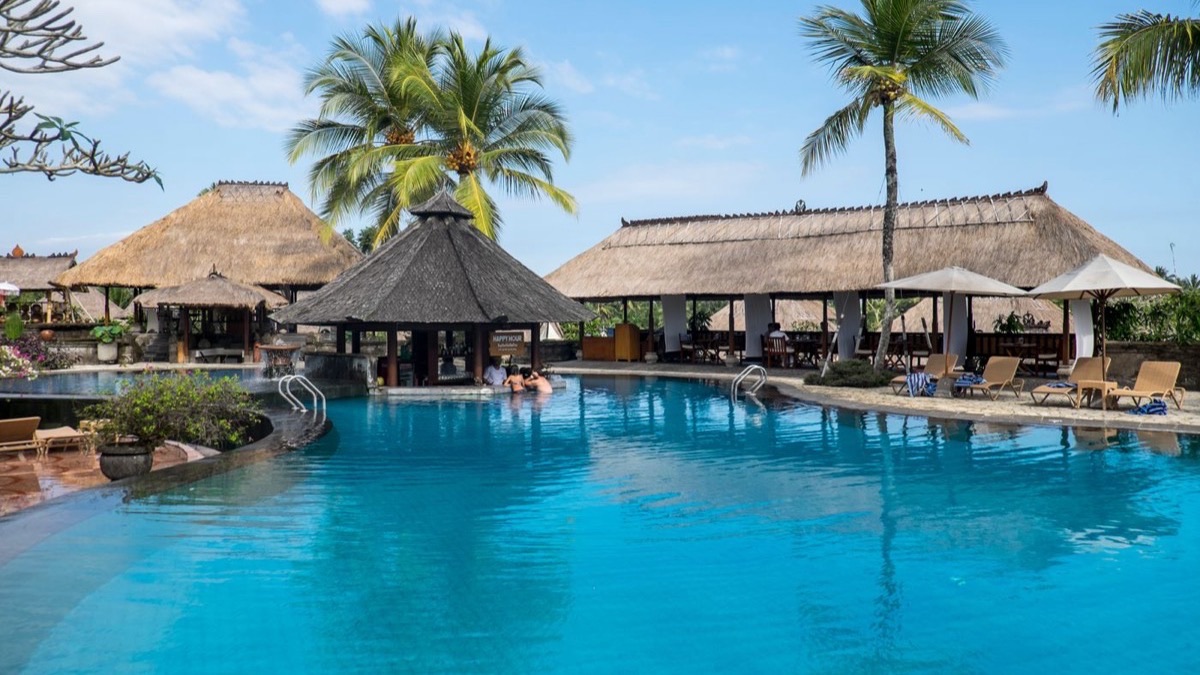
The season matters more than it does for an evening event. From November to February, a daytime event on a lawn is the most pleasant thing Bhopal offers. From April onwards a midday outdoor event is not possible, and the whole thing moves indoors or into the evening. If there is a pool on the property, decide in advance whether it is in use, and if it is not, say so on the invitation.
Who should own what?
An annual day run by a committee in which everybody is responsible for everything is run by nobody. Five roles cover it, and each needs a name against it.
- The event owner. One person with the authority to make decisions on the day.
- Venue and catering. The single point of contact for the venue, who also holds the numbers.
- The stage. The running order, the anchors, the awards and the sound cues.
- Transport. Buses, routes, timings and the return.
- Guests. Chief guests, dealers and visiting leadership, from arrival to rooms.
What goes wrong most often?
Six failures account for most disappointing company events, and every one of them is decided weeks before the day.
- The venue is chosen before the headcount is known, and turns out to be the wrong size.
- The date falls in the wedding season, and the venue the company wanted is unavailable.
- The caterer is given the number of employees, and then the families arrive.
- The speeches run long, and the children are the first to say so.
- The food opens after the last performance, and five hundred people queue at once.
- Nobody owns the return journey.
What drives the budget?
There is no standard figure for an annual day, because eight things move it and each company sets them differently. What you can do is know which they are, and ask for each as its own line.
- Headcount, with families. The largest driver by far, because catering scales directly with it.
- The date. A venue on a peak wedding date is scarcer and priced accordingly. A weekday or a Kharmas date is not.
- The menu and the style of service.
- Stage, sound and lighting.
- Decor, which is the easiest line to scale up or down.
- Transport, if the company runs buses.
- Awards, gifts and any invited performer.
- Rooms, for dealers, guests and visiting leadership.
Ask the venue for an itemised quote, and ask what the total becomes at your ceiling headcount, not only at the expected one. That second number is the one to take to whoever approves the budget.
What is the checklist, week by week?
Eight weeks is comfortable for most dates. For late November, early December or February, start earlier, because the venue has to be found first.
- Eight weeks out. Purpose, format, budget owner, a rough headcount, and two or three possible dates.
- Six weeks out. Venue visit with the committee, an itemised quote, and the date confirmed in writing.
- Four weeks out. Sign-up opens. Programme outline, awards list and the transport decision.
- Two weeks out. Sign-up closes. Final numbers to the venue, the menu fixed, the stage plan and running order settled.
- One week out. Bus routes and timings published. Anchors briefed. Awards and gifts in hand.
- The day before. A walk-through and a sound check at the venue.
- On the day. One named person owns the running order, and another owns transport. Nobody owns both.
Planning a company event at The Heritage Resort
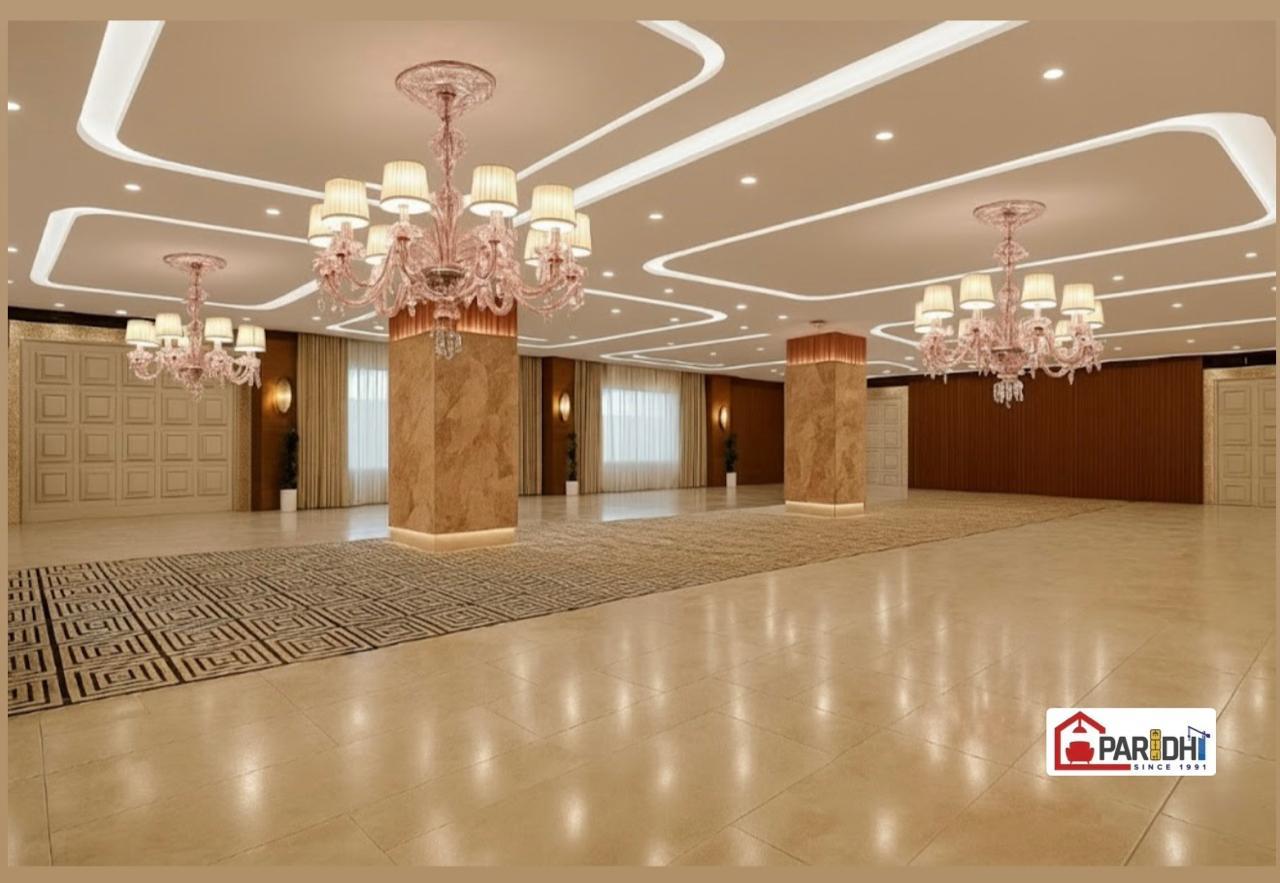
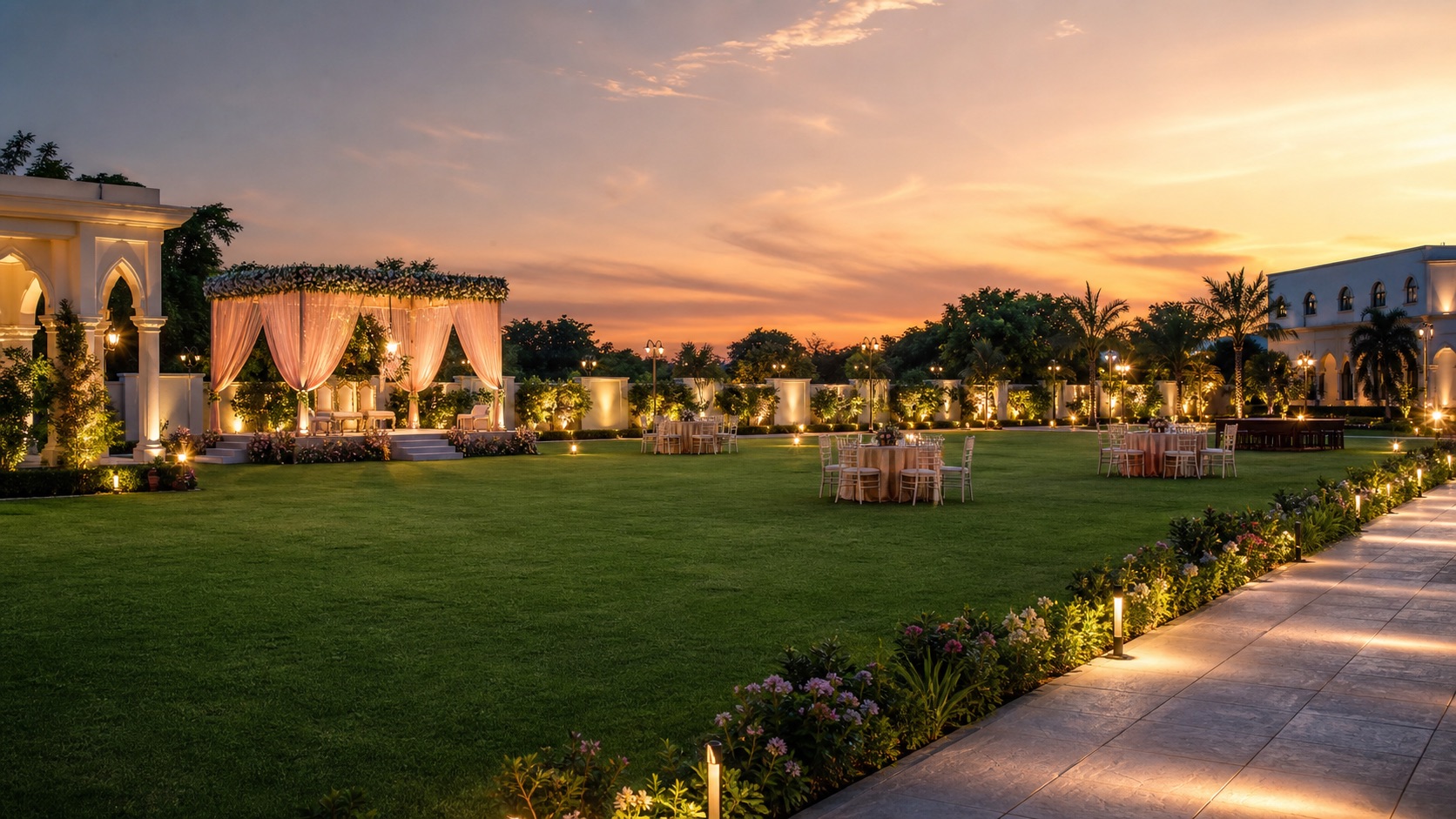
The Heritage Resort in Misrod has an open lawn that hosts 1000+ guests and an air-conditioned banquet hall on the same property, which covers both an annual day with families and a seated award ceremony. Catering is in-house, with vegetarian, Jain and multi-cuisine menus, and the hall has power backup.
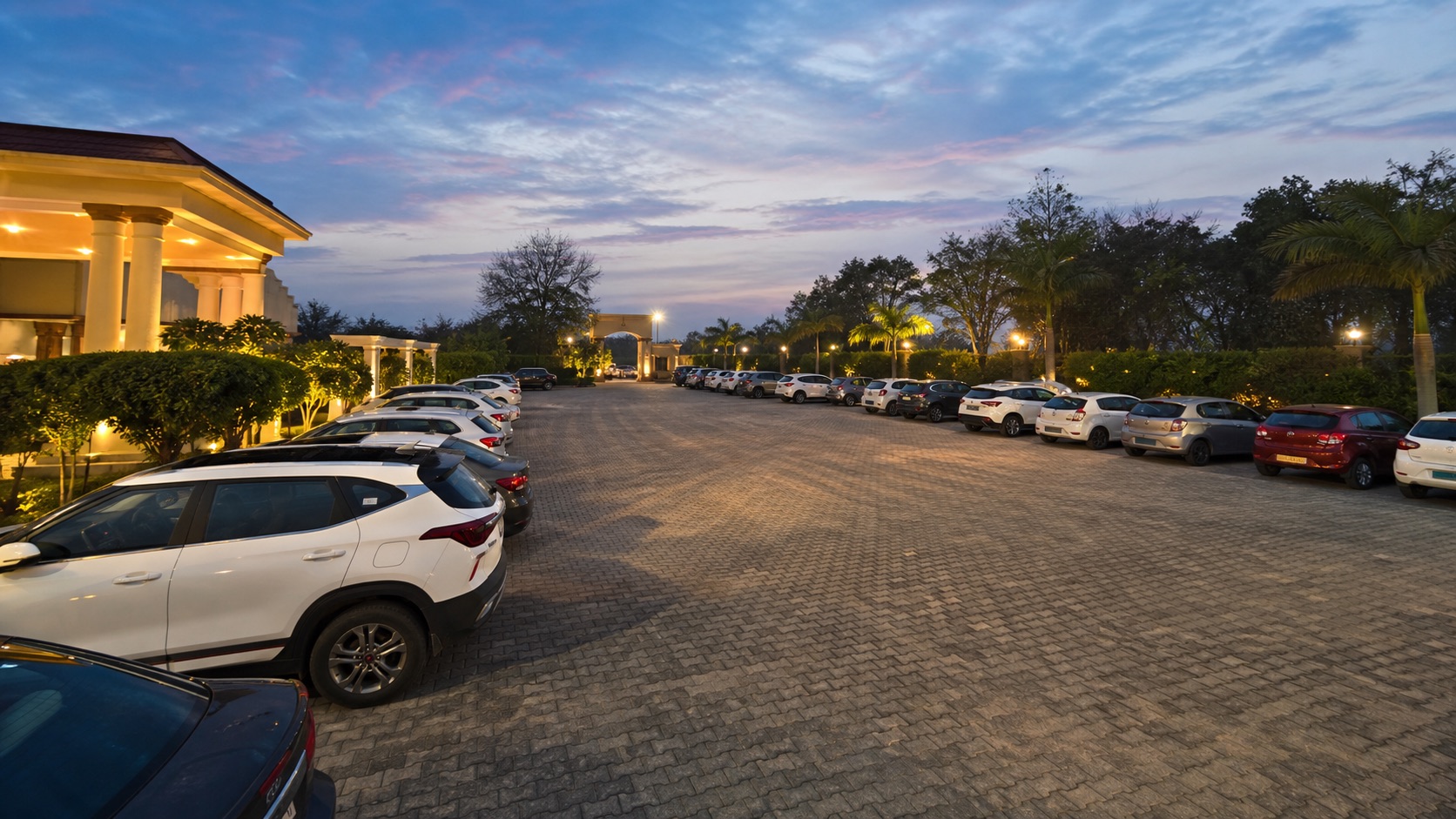
There are guest rooms on the property for dealers and visiting leadership, and managed parking for 200+ cars. If staff are arriving by bus, tell us when you enquire so that the drop-off can be planned.
The resort is on the Hoshangabad Road side of Bhopal, which suits companies in the city and in the Mandideep industrial area alike. To get a proposal, send the event, the date, the expected headcount and whether families are invited on WhatsApp, or call +91 82697 88505. Every event is quoted individually.
Frequently asked questions
- When is the best time to hold a company annual day in Bhopal?
- Mid-December to mid-January is the easiest winter window, because it falls in Kharmas, when there are no wedding dates and venues have availability. October to mid-November also works. Late November to mid-December and February are the peak wedding weeks, when venues need booking months ahead.
- How far ahead should a company event be booked?
- Six to eight weeks is comfortable for most dates. For a date in late November, early December or February, start several months ahead, because those are the weeks when wedding bookings take the venues first.
- How do I estimate the headcount for an annual day?
- Start with employees on roll, apply a realistic attendance rate, then multiply for families if they are invited. Confirm it with a sign-up that records family members per employee, closed about ten days before the event, and give the venue both an expected figure and a ceiling.
- What is the difference between an annual day and a family day?
- An annual day is an evening built around a stage: a leadership address, awards, a cultural segment and dinner. A family day is a daytime event built around the families, with games, activities and food, and very little time on stage.
- Should the company arrange buses?
- For a workforce event, usually yes. It raises attendance and gives you control of the start time, since the programme effectively begins when the last bus arrives. Fix the routes and timings before the stage schedule, and plan the return as carefully as the arrival.
- How long should the programme be?
- Keep the stage programme to about ninety minutes, and the whole event to three or four hours including arrival and dinner. Open the food counters before the last performance ends so that the queue does not form all at once.
- Can a large company event be held outdoors in winter?
- Yes. From October to February a lawn works well for a large event in Bhopal. December and January evenings are cold, so start in the late afternoon, finish the stage programme early, and keep an indoor hall as the fallback.
- What does a company annual day cost?
- There is no standard figure. It depends on the headcount including families, the date, the menu, the stage and sound, decor, transport, awards and rooms. Ask for an itemised quote, and ask for the total at your ceiling headcount as well as the expected one.
- Can The Heritage Resort host a company annual day?
- Yes. The resort has a lawn for 1000+ guests and an air-conditioned banquet hall, with in-house catering, guest rooms and parking for 200+ cars. Send the event, the date and the headcount on WhatsApp, or call +91 82697 88505 for a proposal.