
The short answer
- The haldi ceremony is a pre-wedding ritual in which family members apply a paste of turmeric to the bride and the groom, as a blessing and to prepare them for the wedding.
- It is usually held in the morning, one or two days before the wedding or on the morning of the wedding itself.
- Traditionally the bride and the groom have separate haldi ceremonies, each with their own family. A joint haldi is now common when both families are at one venue.
- The paste is usually turmeric, gram flour (besan) and curd or milk, often with rose water, sandalwood or a little oil.
- Turmeric stains. Choose a setting that can be covered and washed, wear clothes you do not mind losing, and agree the rules with the venue in advance.
- A lawn, a courtyard or a poolside suits a haldi better than a carpeted hall.
The haldi ceremony is a pre-wedding ritual in which the family applies a paste of turmeric to the bride and the groom. It is held a day or two before the wedding, or on the morning of the wedding itself, and it is a blessing, a beauty ritual and the most informal hour of the whole celebration.
It is also the messiest. Turmeric stains skin, clothes, marble and upholstery, and a haldi that is not planned for that ends with a cleaning bill and a ruined outfit.
This guide covers what the haldi means, what goes in the paste, how the ritual usually runs, and then the practical side: the setting, the time of day, outfits, decor, food and how to keep the turmeric where it belongs.
What does the haldi ceremony mean?
Turmeric has been part of Indian ritual for centuries. In a wedding it carries several meanings at once, and most families hold more than one of them.
- A blessing. Yellow is an auspicious colour, and the haldi marks the start of the wedding rituals for the couple.
- Protection. Many families believe the haldi wards off the evil eye, which is why, in some homes, the bride or groom is not supposed to leave the house after it.
- Preparation. The paste is a traditional skin treatment, applied so that the couple look their best on the day.
- Family. Every relative who applies the paste is part of the ritual. For many families, that closeness is the real point of it.
What is the haldi ceremony called in different parts of India?
Almost every community in India has a turmeric ritual before the wedding, under its own name and with its own details. If the two families come from different regions, it helps to know what each one expects.
| Region | Name | Worth knowing |
|---|---|---|
| Madhya Pradesh and North India | Haldi, or tel-haldi | Often combined with an oil ritual, held at each family's home or venue |
| Punjab | Vatna or Maiyan | The paste is applied over several days in some families |
| Gujarat and Rajasthan | Pithi | The paste often includes sandalwood and rose water |
| Maharashtra | Halad | The groom's turmeric is often sent on to the bride's family |
| Bengal | Gaye Holud | Gifts and turmeric are sent from the groom's family to the bride's |
When is the haldi ceremony held?
Most families hold the haldi in the morning, one or two days before the wedding. Some hold it on the wedding morning itself. A pandit may suggest an auspicious time, in which case that decides it.
The morning makes sense for practical reasons too. The light is good for photographs, the day is cool outside the summer months, and there is time to wash the turmeric off before an evening function.
Many families now hold the haldi and the mehndi on the same day: the haldi in the morning, then a bath and a change, then the mehndi in the afternoon. It saves a day, and the guests are already there.
What is haldi paste made of?
The base is turmeric. Most families add gram flour to bind it, and curd or milk to make it smooth. After that, every family has its own recipe.
- Turmeric powder, or fresh turmeric ground into a paste.
- Gram flour (besan), to bind the paste and give it body.
- Curd, milk or malai, to soften it and make it easier to spread.
- Rose water, for fragrance.
- Sandalwood powder, in many Gujarati and Rajasthani families.
- A little mustard oil or coconut oil, which makes the paste easier to wash off.
Patch-test the paste on a small area of skin a few days before the ceremony, especially for a bride or groom with sensitive skin. Keep the paste away from the eyes.
How does the haldi ritual usually run?
The details depend on the family and the community. The broad shape is the same almost everywhere.
- 01
Seating
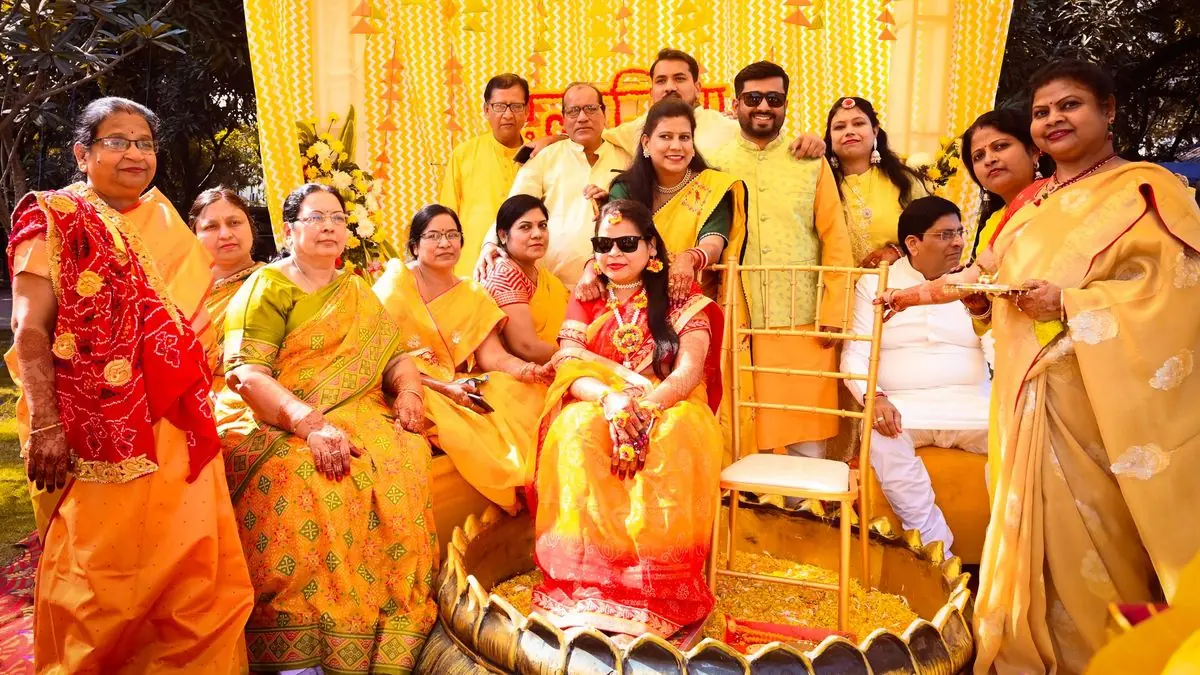
The bride or groom sits on a low seat, sometimes under a canopy of flowers or a dupatta held by relatives.
- 02
Prayer
Some families begin with a short puja, and the first touch of haldi is offered to the gods.
- 03
Application
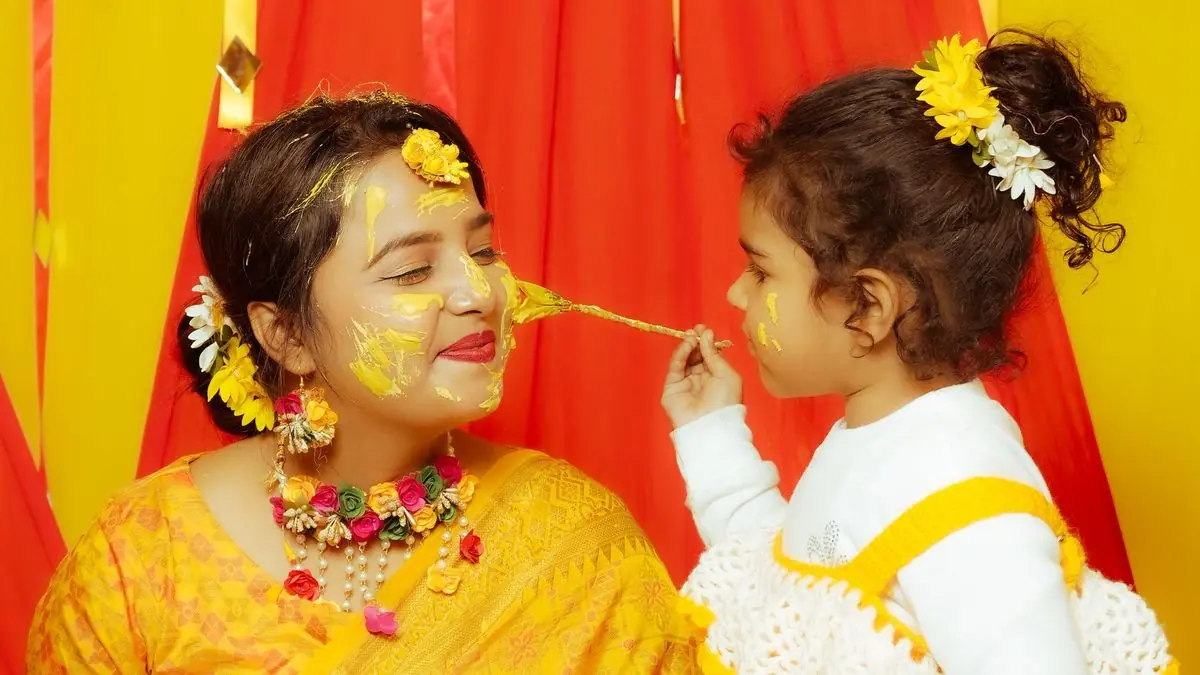
Family members take turns to apply the paste, usually beginning with the mother or the married women of the family.
- 04
Songs and play
Women of the family sing traditional songs, and the ritual often turns into a playful turmeric fight.
- 05
Bath
The bride or groom bathes, and in some families is not supposed to leave the house again before the wedding.
Should the bride and groom have a joint haldi?
Traditionally, no. Each has a haldi at their own home, with their own family, and in some communities the groom's leftover paste is sent to the bride's house to be used on her.
When both families are staying at one venue, as at a destination wedding, a joint haldi has become common. The couple sit side by side, both families apply the paste, and it becomes one of the most photographed hours of the wedding. Ask both families before planning one, since some elders feel strongly about the separate tradition.
Where should you hold the haldi?
The setting decides how much the mess matters. The best haldi settings are open, easy to cover and close to somewhere the bride or groom can bathe.
| Setting | Good for | Watch out for |
|---|---|---|
| Lawn | Large families, flower showers, natural light | Sun from mid-morning in summer. Plan shade. |
| Poolside | Colour, photographs and a splash of fun | Ask the venue's rules on turmeric near the pool. |
| Courtyard or home | A small, traditional haldi | Floors and walls need covering. |
| Indoor hall | Bad weather | Carpets and upholstery stain. Cover everything. |

How do you keep haldi from staining everything?
Turmeric is one of the hardest stains to remove. Plan for it before the paste is mixed, not after.
- Lay sheets or mats under the bride or groom's seat and wherever the paste is mixed.
- Rub a little oil on the skin before the haldi. The paste washes off more easily afterwards.
- Wear clothes you do not need again. Cotton is easier to wash than silk.
- Ask guests in the invitation to dress in yellow and to expect turmeric.
- Keep wet wipes, towels and a bucket of water close by.
- Wash the paste off within an hour or so. Turmeric left on the skin longer leaves a stronger yellow tint.
Haldi ideas: outfits, decor, music and food
Yellow is the expected colour for the bride, the groom and the guests, though white with yellow or orange accents photographs well too. Many brides wear floral jewellery instead of gold, since it does not matter if it gets stained.
The decor is usually marigold: garlands, a flower backdrop behind the seat, and baskets of petals for a flower shower at the end. Brass pots for the paste add to the photographs.
A dhol, or a playlist of wedding songs, keeps the energy up. The women's traditional songs are worth leaving room for. The food should be light and easy to eat with turmeric on the hands: poha, puri bhaji, fruit, chaas and jalebi are all common choices.
A haldi at The Heritage Resort
The Heritage Resort in Misrod, Bhopal, hosts the haldi as part of the wedding functions, on the lawn or by the pool, with guest rooms on the property so the bride or groom can bathe and change without travelling. Catering is in-house, so the haldi breakfast is planned alongside the rest of the wedding menu.
When you enquire, tell us the date, the time and the number of guests, and ask about turmeric near the pool. Send the details on WhatsApp, or call +91 82697 88505.
Frequently asked questions
- What is the haldi ceremony?
- A pre-wedding ritual in which family members apply a paste of turmeric to the bride and the groom. It is a blessing, a protection against the evil eye, and a traditional skin treatment before the wedding.
- Why is haldi applied before marriage?
- Yellow is an auspicious colour and turmeric is believed to bless the couple and ward off the evil eye. The paste is also a traditional skin treatment, applied so that the couple look their best on the wedding day.
- When is the haldi ceremony held?
- Usually in the morning, one or two days before the wedding, or on the morning of the wedding itself. Some families follow a time suggested by their pandit.
- Who applies haldi to the bride and groom?
- Family members, usually beginning with the mother or the married women of the family, followed by other relatives and friends. Customs vary between communities.
- What is haldi paste made of?
- Turmeric, gram flour (besan) and curd or milk are the base. Many families add rose water, sandalwood powder or a little oil. Patch-test the paste on the skin a few days before.
- Do the bride and groom have haldi together?
- Traditionally each has a separate haldi with their own family. A joint haldi is now common when both families stay at one venue, but ask the elders of both families first.
- Can haldi and mehndi be on the same day?
- Yes. Many families hold the haldi in the morning and the mehndi in the afternoon, with a bath and a change in between.
- What should guests wear to a haldi?
- Yellow is traditional, and white with yellow or orange accents also works. Guests should wear clothes they do not mind getting stained, since turmeric rarely washes out completely.
- How do you remove haldi from the skin?
- Rub a little oil on the skin before the ceremony, wash the paste off within an hour or so with water and a gentle cleanser, and use a besan and curd scrub for any tint that remains.
- Does The Heritage Resort host haldi ceremonies?
- Yes. The haldi can be held on the lawn or by the pool at The Heritage Resort in Misrod, Bhopal, with guest rooms on the property and in-house catering. Call +91 82697 88505 or send a WhatsApp message with your date.