
The short answer
- Get two or three muhurat dates from your pandit before you contact any venue. Families with date flexibility get better venues.
- Shortlist three or four venues, no more. Filter on capacity, parking and rooms first; judge beauty on the visit.
- Visit at the time of day your function will actually run, and walk the full guest route from gate to dining.
- Compare quotes on inclusions, not headline numbers. Power backup, generator fuel, cleaning, service staff and taxes are the usual gaps.
- Peak muhurat dates in November, December and February are booked months ahead. A verbal hold is not a booking.
The venue is usually the first large booking a family makes for a wedding, and everything else follows from it. Get it right and the rest of the planning has a shape to fit into. Get it wrong and you spend the next several months working around a decision you cannot undo.
This is the order we would suggest, based on what families work through when they visit us in Misrod, and the questions that turn out to matter months later.
The whole process, done properly, takes about three to four weeks: a week to settle dates and guest count, a week or two of visits, and a few days to compare and confirm.
Step 1: Fix the dates before you look at venues
Speak to your family pandit first, and ask for two or three possible muhurat dates rather than a single one. This is the highest-leverage thing you can do in the entire process.
Venues are booked by date. A family with one fixed date gets whatever venue is still available on it. A family with three acceptable dates can choose the venue they actually want and simply take whichever date it has free. In peak season that flexibility is worth more than any negotiation you will do on price.
If your dates fall in November, December or February, assume the best venues are already being booked and move quickly. Our wedding muhurat dates page lists every auspicious date for the 2026-27 season month by month if you want to see the options before speaking to the pandit.

One fixed date narrows you to whatever is left. Three dates lets you choose the venue and fit the date to it.
Step 2: Agree an honest guest count
Not the invitation list. The realistic attendance. Ask both families for their numbers separately, write them down, and then add a margin, because the number always grows closer to the day and it grows in one direction.
This single figure determines which venues are even worth visiting. Touring a venue that cannot hold your guest list is a wasted afternoon, and touring one at twice the size you need means paying for space that will sit empty and make the event look thin.
A useful sanity check: allow 20 to 25 square feet per guest for a full wedding including mandap, stage, dining and circulation. Five hundred guests needs roughly 10,000 to 12,500 square feet of usable lawn. If a venue's usable area is well below that, it does not matter how good the rest of it is.
Step 3: Decide how many spaces you need
Before you shortlist, settle whether you need one space or two. This is a question about functions, not about size.
If the wedding is a single ceremony and dinner, one good lawn is enough. If there is a sangeet the night before, a mehndi in the afternoon, or a reception on a separate evening, you need either a second space on the same property or a second venue entirely. The first is considerably easier to manage.
Families consistently underestimate how much easier a multi-function wedding becomes when every function happens on one property. Guests learn the route once. Vendors set up once. Nobody drives anywhere between the haldi and the reception.
- Single ceremony and dinner: one lawn or one large hall is sufficient.
- Ceremony plus sangeet or reception: you need an indoor space alongside the lawn.
- Multi-day wedding: you need indoor space, outdoor space and rooms on one property.
- Outstation family attending: rooms move from useful to close to essential.
Step 4: Shortlist three or four venues
Three or four is the right number. Fewer and you have no basis for comparison. More and the visits blur together until you cannot remember which venue had the good parking.
Shortlist on the practical criteria first: does it hold your guest count, is one of your dates available, does it have on-site parking, and does it have rooms if your family needs them. Beauty is easy to assess in ten minutes on a visit. Capacity and logistics are not negotiable and cannot be fixed later.
Also weigh where your guests are coming from. A venue on the same side of the city as most of your family saves every guest thirty to sixty minutes on the day, and saves your relatives from fielding phone calls about directions.
Step 5: Visit in person, at the right time of day
Photographs flatter every venue ever built. Visit in person, and visit at roughly the time of day your function will run. An evening wedding should be judged on an evening visit, when you can see how the lighting actually works and whether the space feels warm or sparse after dark.
Walk the entire route your guests will take: gate, parking, entry, welcome area, mandap, dining, washrooms. Any point where you find yourself squeezing past something is a point where four hundred people will be standing still.
Then look at the parts photographs never show. Where do the caterers work? Where do vendor vehicles park? Where can an elderly relative sit for an hour away from the speakers? Is there anywhere to change?
- Go at the hour your function will run, not whenever is convenient.
- Walk the full guest route rather than standing in the middle of the lawn.
- Look at the service areas, not just the presentation areas.
- Ask to see photographs of a wedding at your guest count on that lawn.
- Check the washrooms. They tell you how the venue is run.
Step 6: Ask these questions before you discuss price
Take this list to every visit and write the answers down. By the third venue you will not remember which one said what, and the differences are exactly where the money is.
- What is included in the quote, and what is billed separately? Power backup and generator fuel, air-conditioning, cleaning, security, service staff and taxes are the usual gaps.
- How many hours does the booking cover, and what happens if the function runs long?
- Can we bring our own decorator, caterer or DJ, and is there an outside vendor fee?
- How many vehicles park on site, and where does overflow go?
- Is there an indoor backup if the weather turns, and is it included or extra?
- How many other functions will run on the property that day?
- Who is our point of contact on the day itself, and will they be present?
- What is the payment schedule, and the cancellation or date-change policy?
The venues that answer these clearly and in writing are usually the ones that run a good event. Vagueness at enquiry stage rarely improves later.
Step 7: Compare quotes properly
Compare like with like. A lower headline number with fewer inclusions is not a better deal, and this is where families most often lose money without noticing.
Line the quotes up against the same checklist: spaces included, hours, catering scope, decor scope, rooms, parking, power backup, staffing and taxes. A quote that looks 15 percent cheaper frequently turns out to be the same or higher once the gaps are filled in with separate invoices on the day.
Our marriage garden pricing guide explains the seven factors that shape any venue quote in Bhopal, which is useful context before you sit down to compare.
| Line item | Ask specifically |
|---|---|
| Spaces | Which spaces, for how many hours, on which dates? |
| Catering | Per plate or total? How many dishes, counters and service staff? |
| Decor | What is included as standard, and what is extra? |
| Rooms | How many, for how many nights, and are they in the quote? |
| Power | Is backup included, and who pays for generator fuel? |
| Parking | Capacity, and is it managed or self-park? |
| Staffing | How many service staff, and are they in the price? |
| Taxes | Is the figure inclusive or exclusive of tax? |
Step 8: Confirm the date in writing
Once you decide, move quickly. Peak muhurat dates go fast, and a verbal hold from a venue is not a booking. Families lose dates in the gap between deciding and paying.
Get written confirmation covering the date, the spaces reserved, the guest count the quote assumes, the inclusions, and the payment schedule. This is not distrust. It is what protects both sides when the event is eight months away and the person you spoke to has changed roles.
Keep the guest count assumption in writing particularly. If the quote assumes 400 guests and 550 attend, you want a documented starting point for that conversation rather than a disagreement in the week of the wedding.

Step 9: Tell your other vendors
The venue date is the anchor everything else hangs from. Once it is confirmed, book the decorator, caterer if external, photographer and any entertainment, in that order of scarcity.
Share the venue's constraints with each of them early: load-in times, vendor parking, power availability, and whether the venue restricts outside suppliers. Vendors who learn about a restriction a week before the wedding become your problem, not the venue's.
Ask the venue for a site visit with your decorator before finalising the design. A decorator who has seen the space designs for it; one working from photographs designs for a lawn that does not exist.
How far in advance should you book?
| Date type | Book by | Why |
|---|---|---|
| Peak muhurat, Nov-Dec weekend | 6-9 months ahead | Highest demand of the year; best venues go first. |
| Peak muhurat, Feb weekend | 5-8 months ahead | Second-busiest window, cool weather and strong dates. |
| Weekday muhurat in season | 3-5 months ahead | Noticeably more availability and more flexibility. |
| Apr-Jun dates | 2-4 months ahead | Lower demand; the AC hall matters more than the lawn. |
| Off-season or non-muhurat | 1-3 months ahead | Widest choice, most negotiating room. |
Common mistakes families make
- Approaching venues with one fixed date, which removes all leverage and most of the choice.
- Comparing headline quote figures rather than inclusions, and paying the difference later in separate invoices.
- Visiting venues in the afternoon for an event that will run at night.
- Accepting a verbal hold and losing the date to a family who paid an advance.
- Forgetting vendor parking, so decorator and catering vehicles consume guest spaces.
- Not writing down the assumed guest count, which becomes contentious if numbers rise.
Booking at The Heritage Resort
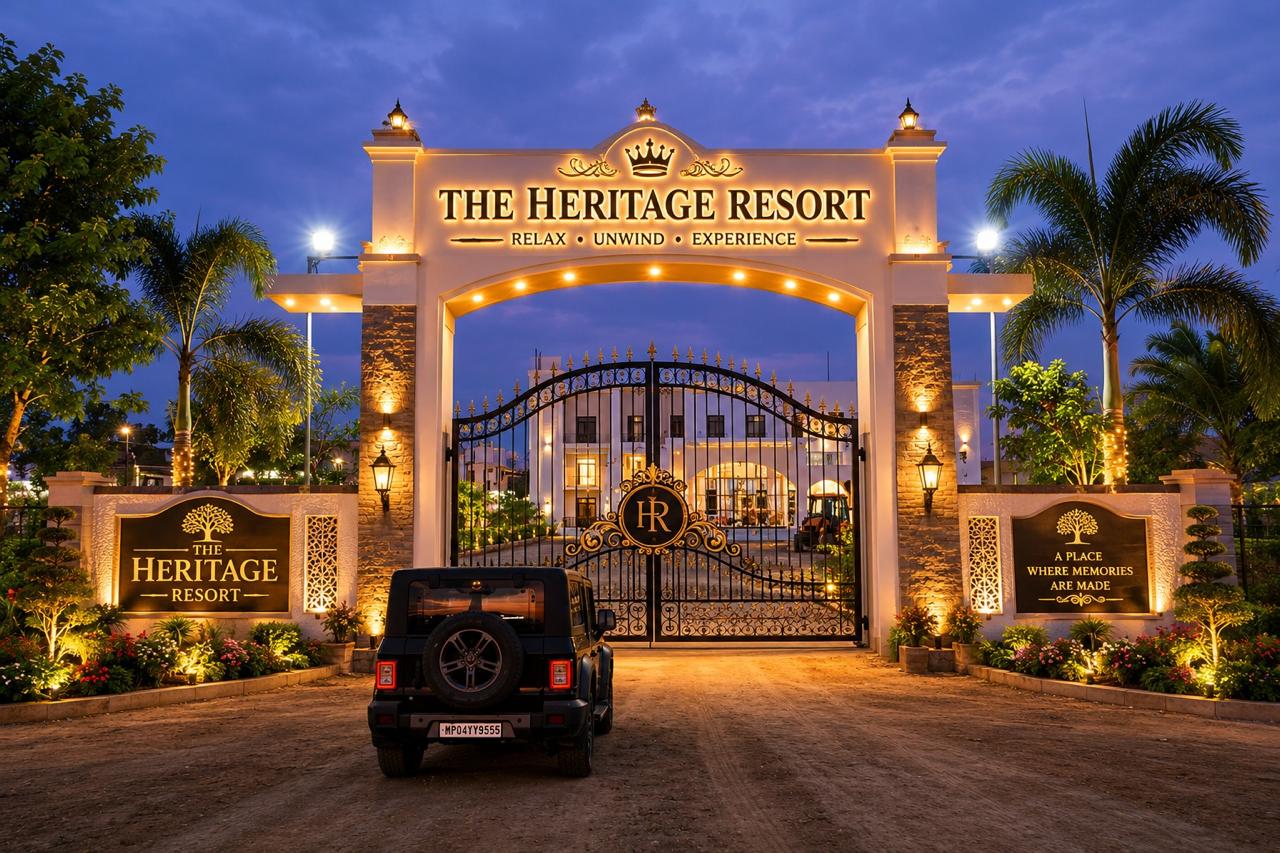
At The Heritage Resort in Misrod the process is deliberately simple. Share your shortlisted dates, your realistic guest count and the functions you are planning, and we prepare a proposal built around them rather than quoting from a fixed rate card. You are welcome to visit and walk the property before deciding anything.
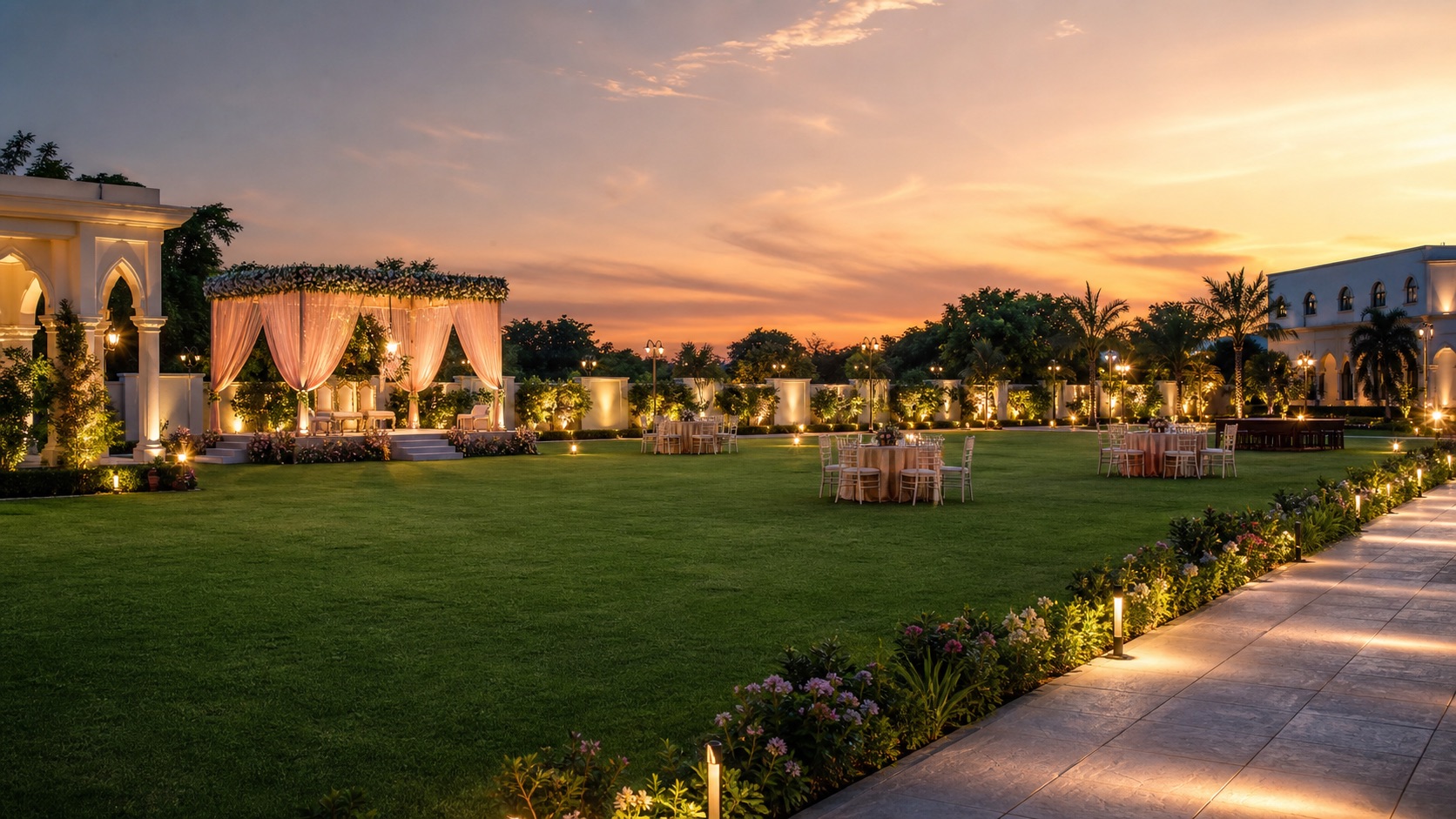
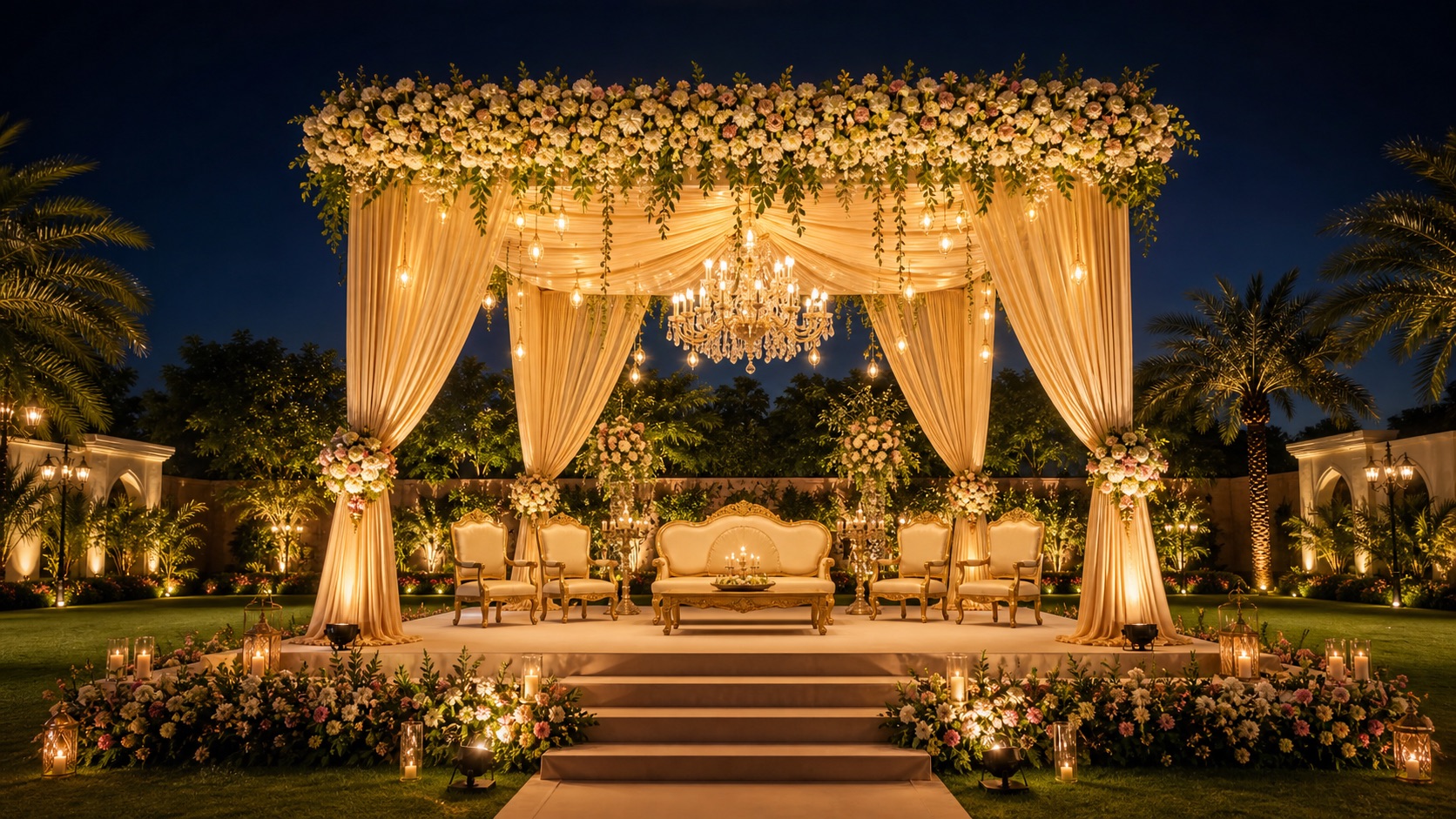
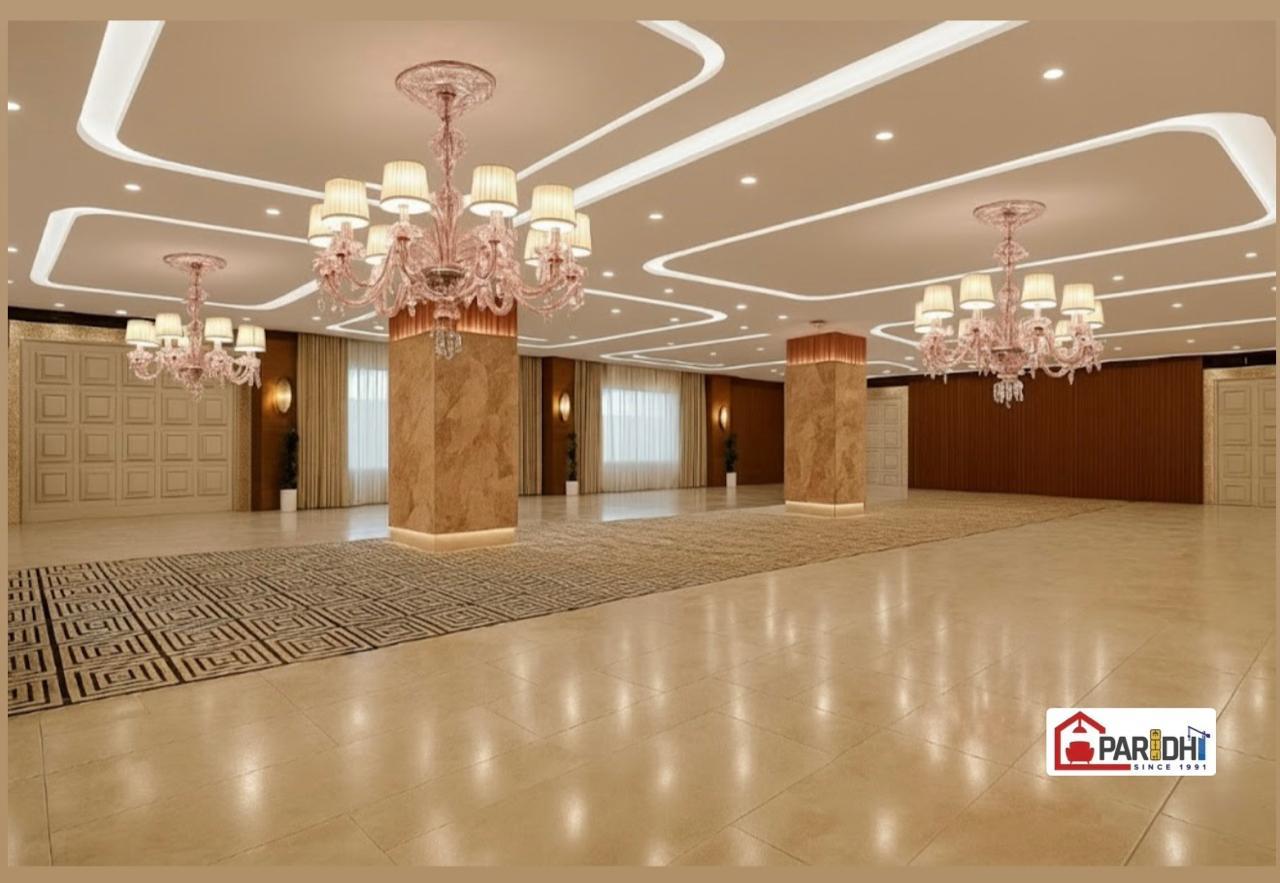
The marriage garden holds grand weddings of 1000+ guests, the air-conditioned banquet hall covers sangeet, reception and indoor functions, and rooms, in-house catering and parking for 200+ vehicles are all on the same property. Our marriage garden and wedding packages pages have the detail on each.
The resort is at Samrdha, near 11 Mile Road in Misrod, on the Hoshangabad Road side of Bhopal, which keeps arrivals straightforward for guests travelling from across the city, from Mandideep, and from Rani Kamalapati station.
Call +91 82697 88505 or send a WhatsApp message with your shortlisted dates and we will tell you what is available.
Frequently asked questions
- How far in advance should I book a marriage garden in Bhopal?
- For peak muhurat dates on a November or December weekend, six to nine months ahead. February weekends need five to eight months. Weekday dates in season need three to five months, and off-season or non-muhurat dates can often be booked one to three months ahead with far more choice.
- Should I fix the wedding date or the venue first?
- Fix the dates first, but get two or three options from your pandit rather than one. Venues are booked by date, so a family with three acceptable dates can choose the venue they actually want, while a family with one fixed date takes whatever is still free on it.
- What should I ask a wedding venue before booking?
- Ask what is included versus billed separately (power backup, generator fuel, cleaning, service staff, taxes), how many hours the slot covers, whether outside decorators and caterers are allowed and at what fee, how many vehicles park on site, whether there is weather backup, how many other functions run that day, and the cancellation policy.
- How do I compare two wedding venue quotes fairly?
- Compare inclusions, not headline figures. Line both quotes against the same checklist: spaces and hours, catering scope, decor scope, rooms, parking, power backup, staffing and taxes. A quote that looks cheaper often matches or exceeds the other once the missing items are added as separate invoices.
- How many venues should I shortlist?
- Three or four. Fewer gives you no basis for comparison; more and the visits blur together. Filter your shortlist on capacity, date availability, parking and rooms before considering how the venue looks, because appearance is quick to judge on a visit and logistics cannot be fixed later.
- Is a verbal hold from a venue the same as a booking?
- No. A verbal hold is not a booking and families regularly lose dates in the gap between deciding and paying an advance. Get written confirmation of the date, spaces reserved, assumed guest count, inclusions and payment schedule before you consider the venue secured.
- What should the written confirmation include?
- The date, the specific spaces reserved, the guest count the quote assumes, everything included in the price, and the payment schedule with cancellation and date-change terms. Recording the assumed guest count matters most, because it is the usual source of disagreement if attendance rises before the wedding.